Blog
Amethyst Guide: How to Choose and Care for February’s Birthstone

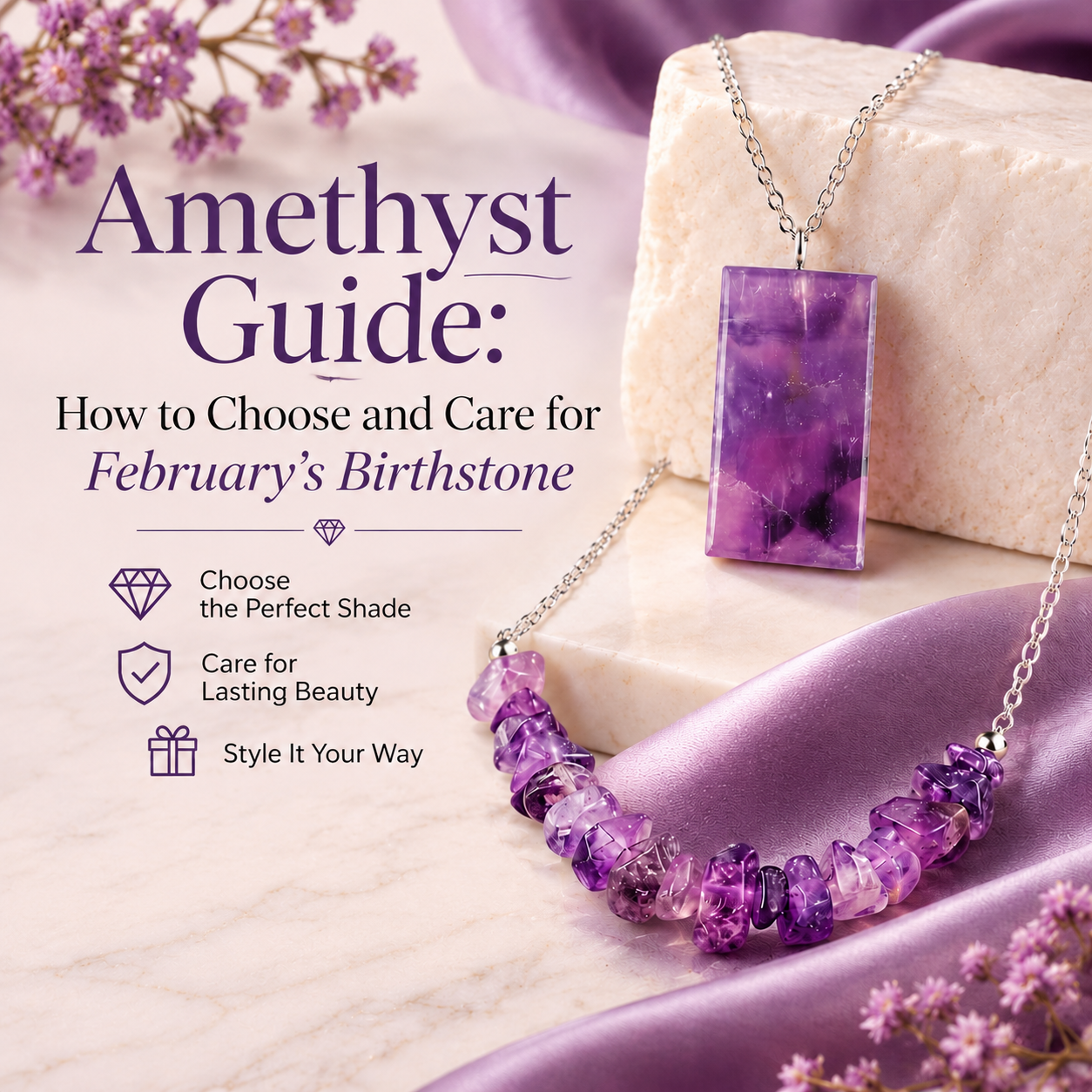
Amethyst is one of those stones almost everyone recognizes on sight, yet most shoppers aren’t sure what separates a gorgeous piece from a so-so one. It’s the February birthstone, it comes in every shade from soft lilac to deep grape, and it’s tough enough to wear every day. This guide walks you through what amethyst actually is, how to pick a color you’ll love, how to read a product listing, and how to keep it looking bright for years.
What Is Amethyst?
Amethyst is purple quartz. Its color comes from traces of iron in the crystal combined with natural radiation in the earth over a very long time. Because it’s quartz, it rates a 7 on the Mohs hardness scale, which means it holds up well to daily wear in rings, pendants, and earrings. Big deposits are found in Brazil, Uruguay, and Zambia, so good-quality amethyst is widely available and usually far more affordable than other purple gems.
If you’re starting a collection, browsing our amethyst collection is an easy way to see how different shapes, cuts, and settings change the look of the same stone.
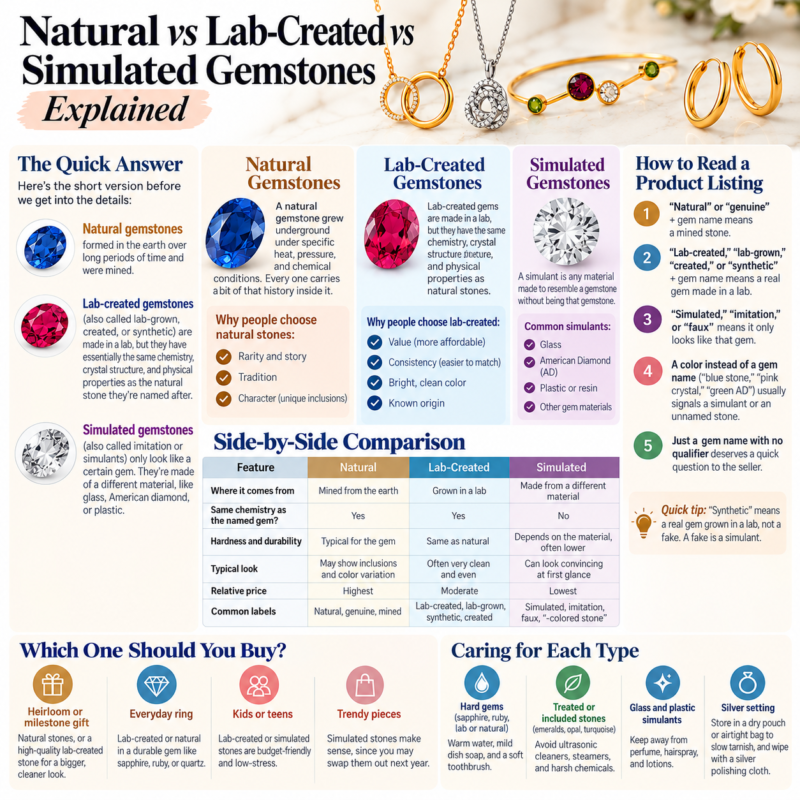
Natural, lab-created, or simulated?
You’ll run into three terms when shopping, and they mean very different things:
- Natural amethyst is mined quartz that formed in the earth. It may show tiny inclusions or slight color zoning.
- Lab-created (synthetic) amethyst is grown in a lab and has the same chemistry and hardness as natural amethyst. It often looks extremely clean and evenly colored.
- Simulated amethyst is a look-alike, usually purple glass or another material. It can be pretty, but it isn’t quartz and it scratches more easily.
None of these is “bad.” What matters is that the listing tells you which one you’re buying. Check the product description for the stone type, and if it doesn’t say, ask before you order.
Color, Look, and Meaning
Color is the biggest factor in how amethyst looks and how it’s valued. Here’s a quick way to think about the range you’ll see:
| Shade | What it looks like | Best for |
|---|---|---|
| Pale lilac (often sold as “Rose de France”) | Soft, airy lavender with a pinkish tint | Delicate everyday pieces, pastel outfits, fair or cool skin tones |
| Medium purple | Clear, even violet that reads “amethyst” from across a room | Pendants and studs you’ll wear constantly |
| Deep purple (sometimes called “Siberian”) | Rich grape color with red or blue flashes | Statement rings, evening wear, gifts that feel luxe |
| Raw or chip amethyst | Rough, uncut crystal with natural texture | Boho and layered looks, casual style |
Those trade names describe a color style, not where the stone came from, so don’t assume a “Siberian” amethyst was mined in Siberia.
As for meaning, amethyst has a long history of folklore. The name comes from the ancient Greek amethystos, roughly “not intoxicated,” and the Greeks traditionally associated the stone with a clear head. Over the centuries it became linked with royalty (purple dye was once rare and expensive), and today it’s traditionally associated with calm, clarity, and thoughtful love. That symbolism is a big part of why it’s such a popular February birthday and Valentine’s gift. Think of it as tradition and sentiment, not a promise of any physical effect.
How to Choose Amethyst Jewelry
1. Pick color first, then clarity
A strong, even purple usually matters more than perfect clarity. Look for color that’s consistent across the stone without obvious pale patches. Most faceted amethyst is “eye-clean,” meaning you won’t see inclusions without magnification. If a stone looks cloudy or very washed out, keep looking.
2. Look at the cut
A well-cut amethyst sparkles evenly and doesn’t have a dark, dull center. Hearts, ovals, and cushion cuts are flattering and forgiving. Cabochons (smooth, domed stones) show off color but don’t sparkle, which gives a softer, vintage feel.
3. Check the metal
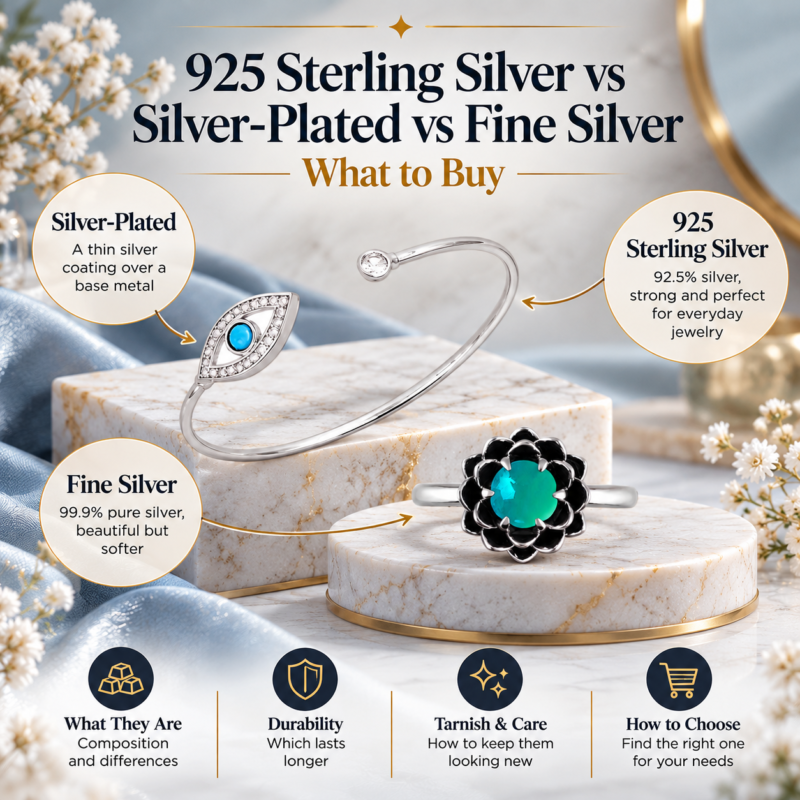
Amethyst and silver are a classic pairing because the cool white metal makes purple look crisp and bright. Here’s what to look for in the listing:
- 925 sterling silver is 92.5% pure silver and 7.5% other metals, usually copper, for strength.
- Rhodium-plated sterling silver is sterling with a thin rhodium coating that adds shine and slows tarnish. The plating can wear over time with heavy use.
- Silver-plated pieces have a thin silver layer over a base metal. They aren’t solid sterling, so expect them to wear faster.
Sterling silver is often a good option for sensitive skin, but alloys vary, so check the product details if you react to certain metals.
4. Match the piece to your life
- Rings: Amethyst handles daily wear, but a bezel or low setting protects the stone better than tall prongs if you use your hands a lot.
- Pendants: The safest everyday choice since they take very few knocks. An 18-inch chain sits right at the collarbone on most women.
- Earrings: Studs are office-friendly; drops add movement and catch the light near your face.
- Bracelets: Tennis and bead styles look great but get bumped the most, so take them off for chores and workouts.
How to Wear Amethyst
Purple is more versatile than people expect. A few easy pairings:
- Neutrals: Gray, navy, cream, and black make amethyst the star of the outfit.
- Greens: Olive and sage create a soft, earthy contrast that works beautifully in fall.
- Same-family colors: Lavender, plum, and burgundy give you a polished tonal look.
- Holiday dressing: Deep amethyst with a black or emerald velvet top feels festive without trying too hard.
One mistake to avoid: piling several different purple shades together. Pick one tone of amethyst per outfit and let it repeat, such as matching studs and a pendant, so the look feels intentional.
How to Care for Amethyst
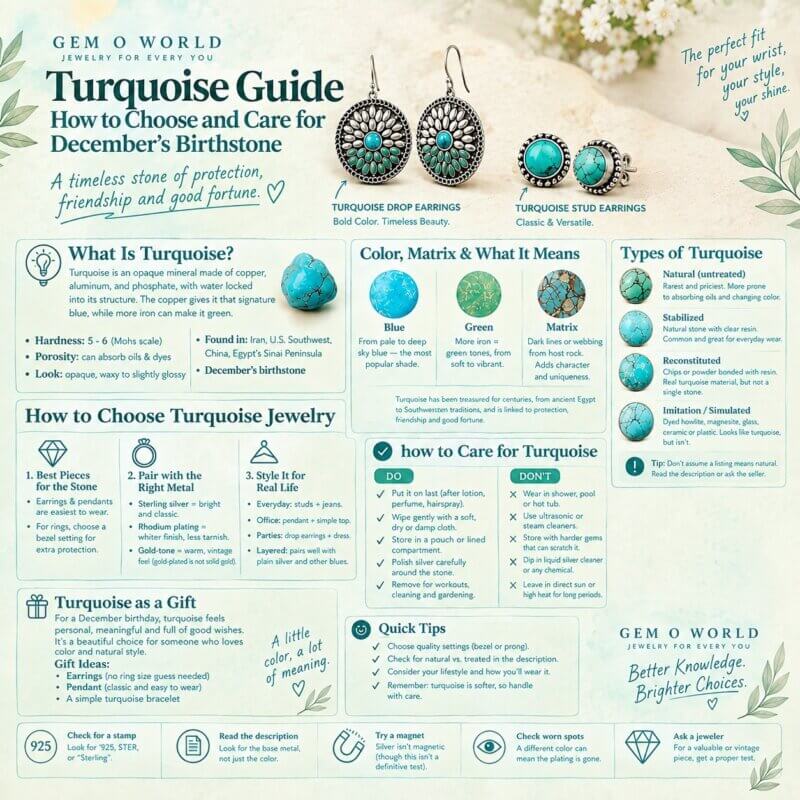
Amethyst is low-maintenance, with two big exceptions: strong heat and long sun exposure. Heat can permanently change its color (that’s actually how much of the citrine on the market is made), and years of direct, intense sunlight can slowly fade deep purple stones.
| Do | Don’t |
|---|---|
| Clean with lukewarm water, a drop of mild dish soap, and a soft toothbrush | Use steam cleaners or very hot water |
| Pat dry with a soft, lint-free cloth | Leave pieces on a sunny windowsill or dashboard |
| Polish the silver with a jewelry cloth, avoiding the stone | Dip sterling and stone into harsh silver dip |
| Store each piece in a soft pouch or lined compartment | Toss it loose with harder gems like diamonds or sapphires that can scratch it |
| Put jewelry on after lotion, perfume, and hairspray | Wear it while swimming in chlorinated pools or hot tubs |
For sterling settings, a small anti-tarnish strip in your jewelry box goes a long way. If you notice a prong lifting or a stone wiggling, stop wearing the piece until a jeweler checks it.
Finding Your Amethyst Piece
If you’re buying your first amethyst, start with something you’ll actually wear often. A pendant is hard to beat: it’s easy to style, gentle on the stone, and works for a February birthday, Valentine’s Day, or a “just because” gift. If a classic shape appeals to you, our amethyst heart pendant necklace pairs a polished purple heart with rhodium-plated sterling silver and is a lovely place to begin.
Frequently Asked Questions
Can you wear amethyst every day?
Yes. At 7 on the Mohs scale, amethyst is durable enough for daily wear, especially in pendants and earrings. Rings and bracelets take more knocks, so remove them for heavy chores, the gym, and cleaning with chemicals.
Does amethyst fade in the sun?
It can, but slowly. Long-term exposure to strong, direct sunlight or heat may lighten the color over time. Normal outdoor wear is fine; just don’t store your pieces somewhere sunny or hot.
How can I tell if my amethyst is real?
Start with the seller’s product description, which should state whether the stone is natural, lab-created, or simulated. Glass imitations may show tiny round bubbles and scratch more easily than quartz. For a definite answer on a valuable piece, a qualified gemologist can test it.
What’s the difference between amethyst and purple glass?
Amethyst is a crystalline mineral (quartz), while glass is a man-made material without a crystal structure. Amethyst is harder, often feels cool to the touch, and may show natural color zoning, while glass tends to look uniform and can chip or scuff with wear.
Is amethyst a good gift for someone not born in February?
Absolutely. Purple is a flattering color on many people, and amethyst’s traditional association with calm and thoughtful love makes it a meaningful gift any time of year. It’s also an affordable way to give a genuine gemstone.