Blog
Garnet Guide: Colors, Meaning, and How to Choose January’s Gem

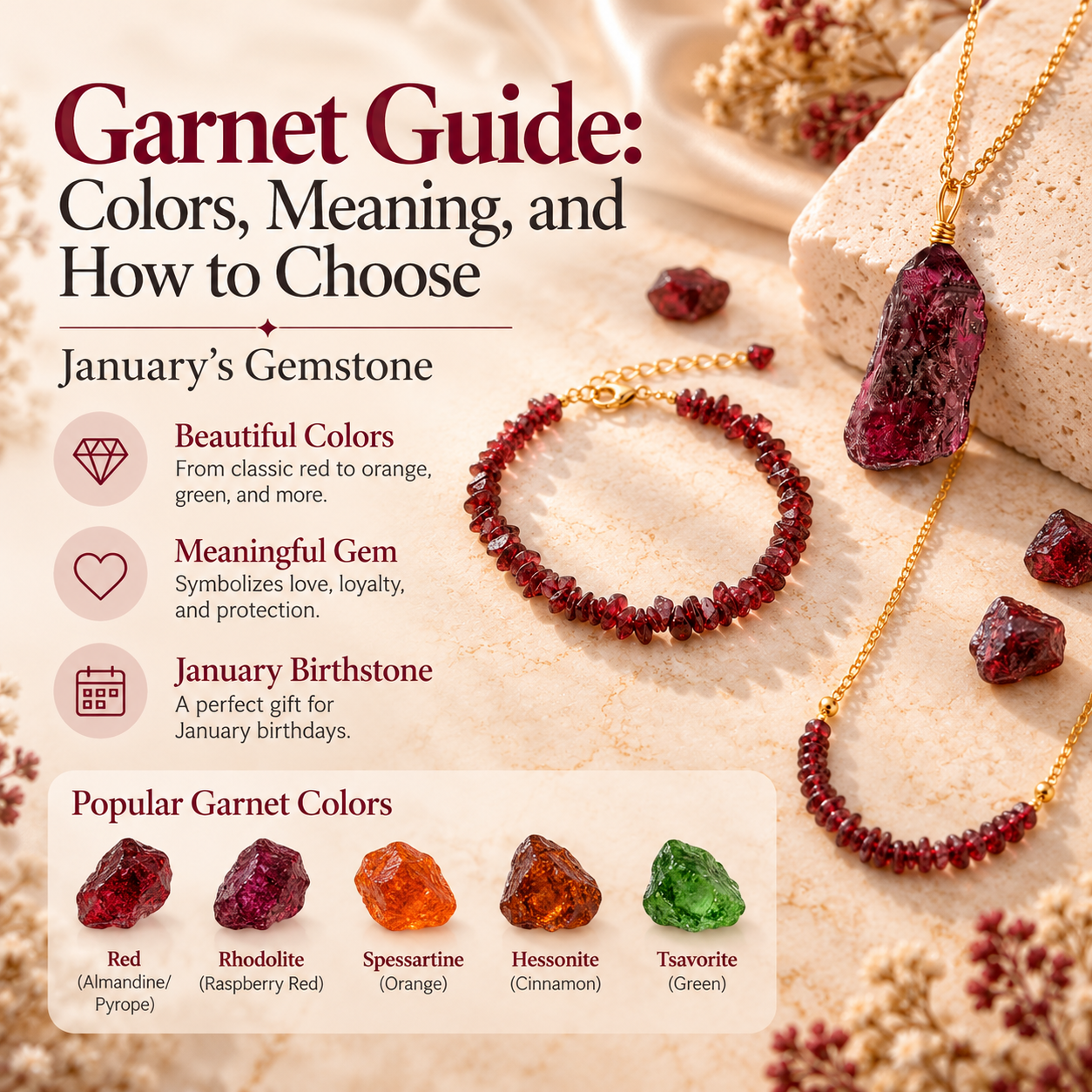
Most people picture garnet as one thing: a small, dark red stone in a grandmother’s ring. That’s part of the story, but not all of it. As January’s gem, garnet comes in more colors than almost any other gem family; it’s tough enough for everyday wear, and it’s still one of the more affordable ways to wear real color. If you’re shopping for a January birthday or simply want a deep red that looks right from November through Valentine’s Day, here’s what to know before you buy.
What Is Garnet, Exactly?
“Garnet” isn’t a single mineral. It’s the name for a group of closely related silicate minerals that share the same crystal structure but have different chemistry. That chemistry is why garnets range from wine red to orange to bright green.
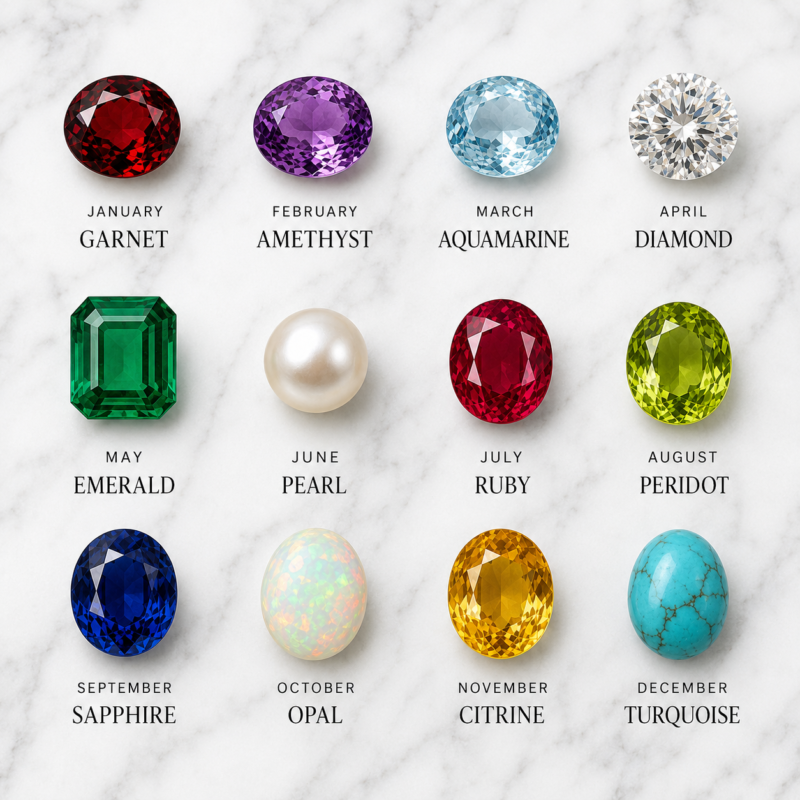
The name is usually traced to the Latin granatum, meaning pomegranate, because small red garnet crystals look a lot like pomegranate seeds. It’s the traditional birthstone for January, and many anniversary lists name it as the gem for the second wedding anniversary.
If you already know you want the classic red look, our January garnet collection is a good place to see how the stone looks in sterling silver and gold-tone settings next to each other.
Garnet Colors and Types at a Glance
You don’t have to memorize mineral names, but a few come up often in product listings and with jewelers. Here are the main ones:
| Type | Typical color | What to know |
|---|---|---|
| Almandine | Deep red, sometimes brownish | The classic “garnet red.” Larger stones can look very dark. |
| Pyrope | Fiery to blood red | Often brighter than almandine; historically linked to Bohemian garnet jewelry. |
| Rhodolite | Raspberry to purplish red | A pyrope-almandine mix. Lighter tone, so it stays lively in bigger sizes. |
| Spessartine | Orange to reddish orange | Bright “mandarin” shades are very sought after. |
| Hessonite | Cinnamon, honey brown | A warm, earthy grossular garnet. |
| Tsavorite | Vivid green | A green grossular garnet; usually small and pricier. |
| Demantoid | Yellowish to grass green | Known for strong sparkle. Rare and on the softer side for a garnet. |
When a listing just says “garnet” with no variety named, it almost always means a red stone in the almandine-pyrope range.
Color, Look, and Symbolism
Red garnet reads as rich and warm rather than bright. It doesn’t shout the way a ruby-red glass stone does. That’s why it works so well with fall and winter wardrobes: camel coats, cream knits, black, charcoal, and deep green.
On the cultural side, garnet carries a lot of tradition. It has long been associated with friendship, loyalty, and commitment, which is part of why it’s a popular gift between close friends and partners. In old travel folklore, garnet was said to protect travelers on the road. These are traditional meanings and symbolism. They’re a lovely reason to choose a stone, not a promise of any physical effect.
Does garnet suit your skin tone?
- Warm undertones: Spessartine orange, hessonite, and brownish-red almandine look especially good, and gold-tone settings pull it all together.
- Cool undertones: Purplish rhodolite and true reds look crisp in sterling silver or white rhodium finishes.
- Neutral undertones: Classic red garnet works in either metal, so pick based on the rest of your jewelry.
How to Choose a Garnet You’ll Love
1. Start with color, then tone
Color matters most. For red garnet, look for a stone that still shows red when you hold it at arm’s length indoors. Very dark stones can look almost black under office lighting. If you love red but find almandine too moody, ask about rhodolite.
2. Keep size and darkness in balance
Here’s a tip a lot of shoppers miss: dark garnets often look better small. A 4 to 6 mm red garnet in stud earrings or a dainty pendant shows nice color. Go much bigger in a dark stone and it can lose its glow. Lighter garnets handle larger sizes better.
3. Check clarity with your eyes
Most red garnets are clean to the naked eye. You shouldn’t see obvious cracks or cloudy patches at normal viewing distance. Tiny inclusions you can only find with a loupe aren’t a problem for everyday jewelry.
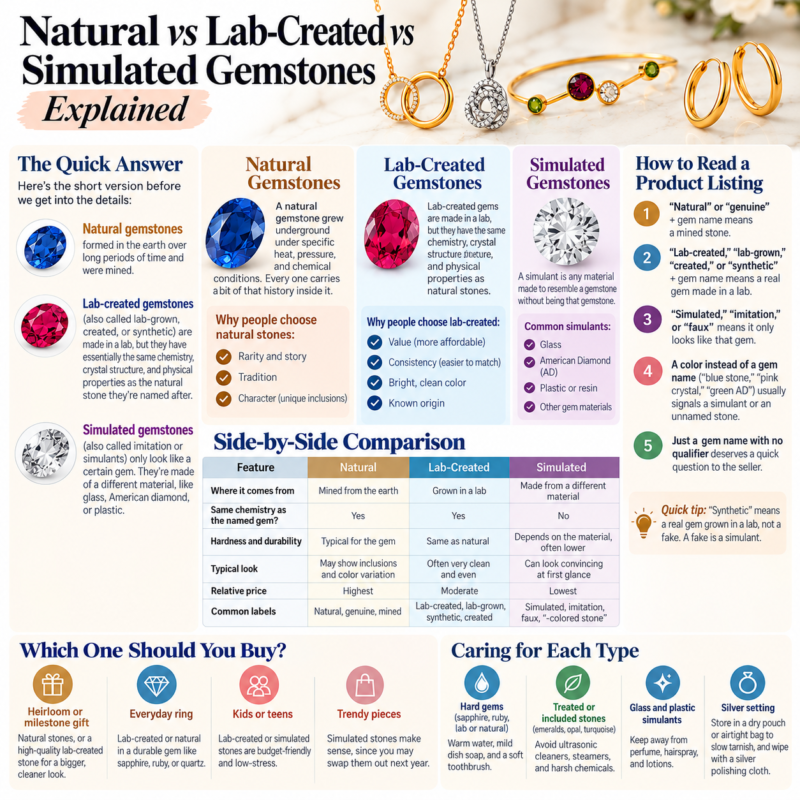
4. Know what you’re buying: natural, lab-made, or imitation
Natural garnet is plentiful enough that many garnet pieces use natural stones, but don’t assume it. Always check the listing.
- Natural garnet: Mined, then cut and polished. The listing should say “natural.”
- Lab-created materials: You may see names like YAG or GGG. They’re made in a lab and have a garnet-like structure, but they aren’t the same as natural garnet, and they were mostly used to imitate diamond.
- Imitation or simulated: Red glass or other materials made to look like garnet. They can be pretty, but they’re not garnet.
If a listing doesn’t say which one it is, ask before you buy, especially if it’s a gift.
5. Pick a setting that fits how she’ll wear it
Garnet sits at roughly 6.5 to 7.5 on the Mohs hardness scale. That’s fine for earrings and pendants, and good for rings that get worn with some care. For a ring you’ll wear every day, a bezel or a low prong setting protects the stone better than a tall, exposed one.
As for metal, 925 sterling silver is 92.5% silver and 7.5% other metals, usually copper. Gold-plated or gold-filled pieces have a layer of gold over a base, so they’re not solid gold. Both can look gorgeous with garnet. It just helps to know what you’re paying for.
How to Wear Garnet Through the Season
- Everyday: Small garnet studs or a single-stone pendant on an 18-inch chain. Low-key, but it adds a little color near your face.
- Office: Pair a garnet pendant with a black or navy top. It looks polished without looking flashy.
- Holiday parties: Garnet drop earrings with a simple black dress or a green velvet top. Skip a busy necklace and let the earrings do the work.
- Layering: Mix a garnet piece with plain silver chains instead of other colored stones so the red stays the focus.
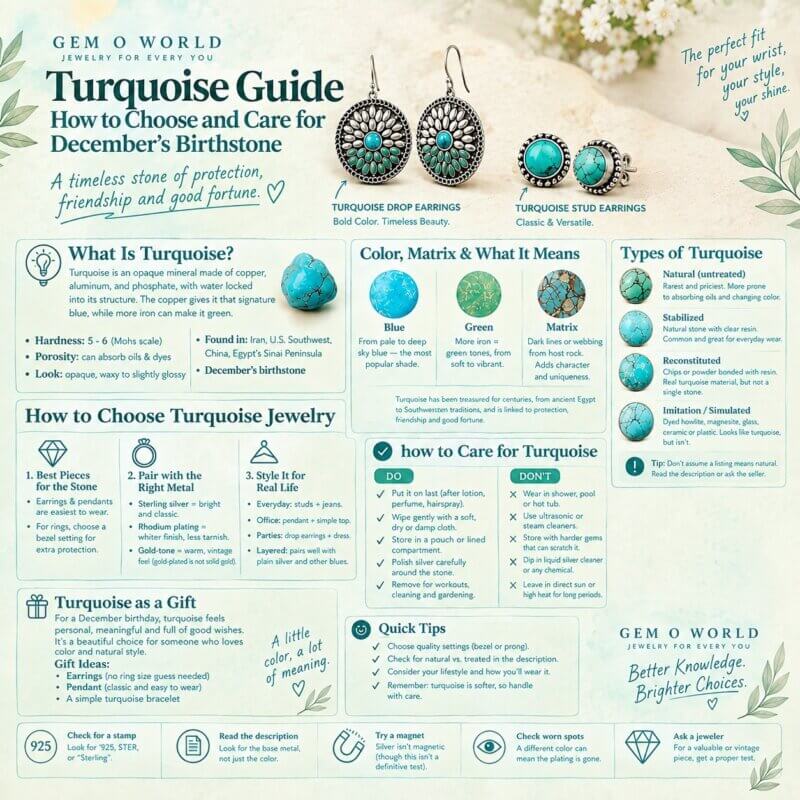
How to Care for Garnet Jewelry
Garnet is easy to care for, which is part of its charm.
| Do | Don’t |
|---|---|
| Clean with warm water, a drop of mild dish soap, and a soft brush | Use harsh chemicals, bleach, or abrasive powders |
| Dry fully with a soft, lint-free cloth | Steam-clean garnet without checking with a jeweler first |
| Store pieces separately in a soft pouch | Toss garnet in a drawer with harder stones that can scratch it |
| Put jewelry on after lotion, hairspray, and perfume | Wear garnet rings while gardening, lifting weights, or cleaning |
| Use a silver polishing cloth on the metal only | Rub silver dip or polish directly onto the stone |
Avoid sudden temperature changes, like going from a hot car into cold water. Demantoid in particular is softer than other garnets, so treat it more gently.
Garnet as a Gift
Garnet checks a lot of boxes: it’s a real gemstone, it’s the January birthstone, the color fits the holiday season, and it usually costs less than ruby or other “big name” red gems. For a first gemstone gift, stud earrings or a simple pendant are the safest choices because nobody has to guess a ring size. If you’re shopping for more than one person this season, you might also enjoy browsing our full birthstone collection to match each person to their own month.
Frequently Asked Questions
Is garnet a good stone for an everyday ring?
Yes, for most people. Garnet is about 6.5 to 7.5 on the Mohs scale and has no easy cleavage, so it holds up well to regular wear. Choose a protective setting like a bezel, and take the ring off for heavy work or the gym.
How can I tell if my garnet is real or glass?
Glass often shows tiny round bubbles under magnification and can feel warmer to the touch, and its edges tend to look softer and more worn. Garnet usually has crisper facet edges and may contain small needle-like or crystal inclusions. A jeweler or gemologist can confirm it with simple tools.
What month is garnet the birthstone for?
Garnet is the traditional birthstone for January. It’s also often listed as the gemstone for a second wedding anniversary, which makes it a nice option for couples, too.
Does garnet look better in silver or gold?
Both work. Sterling silver gives red garnet a cooler, crisper look, while gold tones bring out its warmth. If the wearer mostly wears one metal, match that so the new piece fits right into her collection.