Blog
November Birthstones: Citrine vs. Topaz and How to Choose

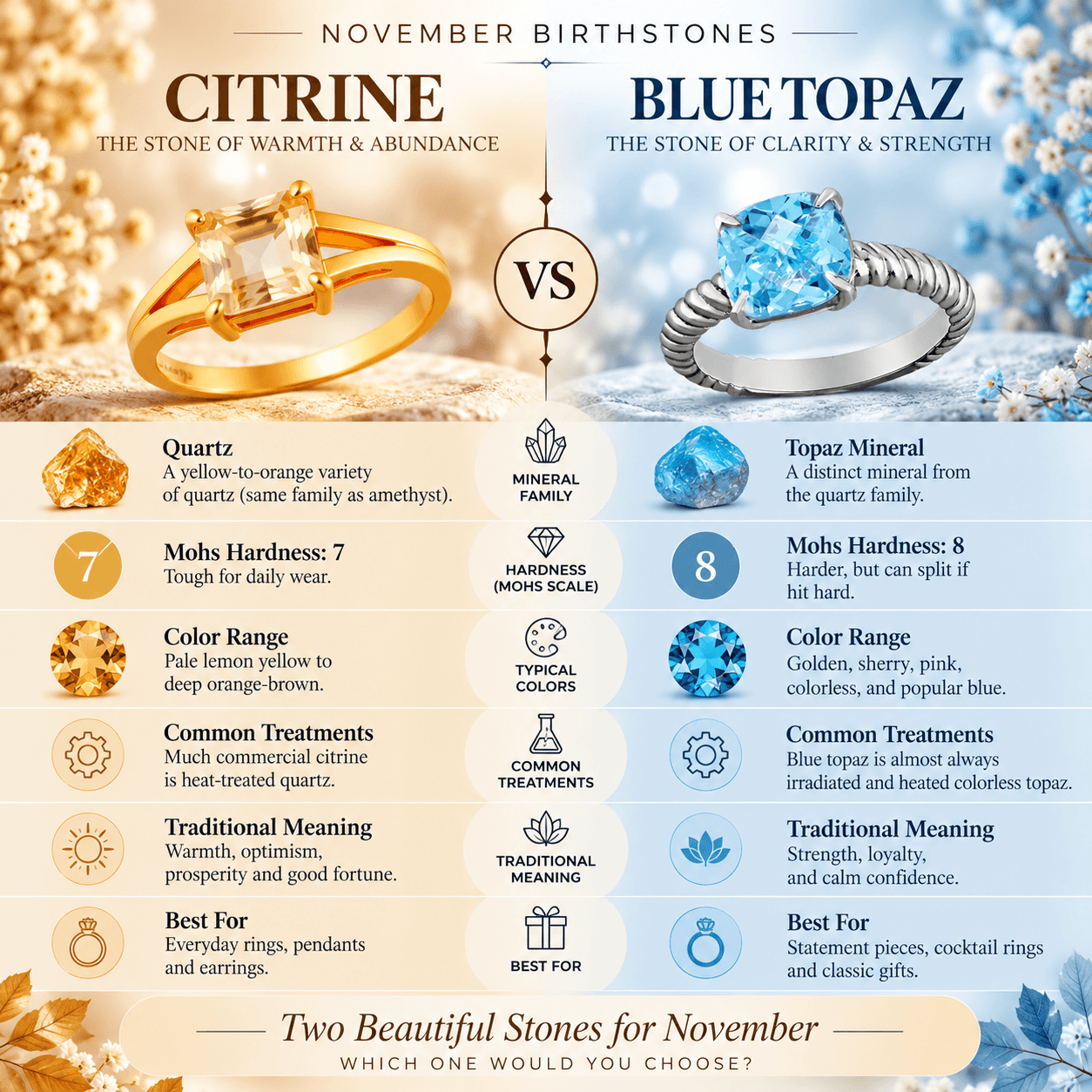
November babies get a rare treat: not one birthstone, but two. Citrine and topaz both come in those warm, honey-to-amber shades that look right at home next to fall sweaters and Thanksgiving tablescapes, yet they’re very different stones once you look closer. If you’re shopping for yourself or hunting for a birthday gift, this guide walks you through what each stone is, how to tell them apart, how to pick a good one, and how to keep it looking bright for years.
What Are the November Birthstones?
Modern US birthstone lists name both topaz and citrine for November. Topaz is the older, traditional pick. Citrine was added later, partly because it offers a similar golden color at a friendlier price, which makes it easy to find in everyday sterling silver pieces like the ones in our November citrine birthstone collection.
Here’s the short version of how they differ:
- Citrine is a yellow-to-orange variety of quartz, the same mineral family as amethyst.
- Topaz is a completely separate mineral that comes in many colors, including golden, pink, colorless, and the popular blue.
- Both can look similar in a warm yellow shade, so the label (and the seller’s description) matters.
Citrine vs. Topaz at a Glance
| Feature | Citrine | Topaz |
|---|---|---|
| Mineral family | Quartz | Topaz (its own mineral) |
| Hardness (Mohs scale) | 7 | 8 |
| Typical colors | Pale lemon yellow to deep orange-brown | Golden, sherry, pink, colorless, and treated blues |
| Common treatments | Much commercial citrine is heat-treated quartz | Blue topaz is almost always irradiated and heated colorless topaz |
| Durability notes | Tough for daily wear; strong heat or long sun exposure may fade some stones | Harder, but can split along its cleavage if hit hard |
| Best for | Everyday rings, pendants, and earrings | Statement pieces, cocktail rings, and gifts with a classic feel |
Citrine: The Sunny, Everyday November Stone
Citrine gets its name from the French word for lemon, and the color range runs from soft lemonade yellow all the way to a deep, reddish “Madeira” orange. Natural citrine with strong color is fairly uncommon. A lot of the citrine you’ll see in stores started life as amethyst or smoky quartz and was heat-treated to bring out the golden tone. That’s a standard, stable treatment in the jewelry trade, but it’s worth knowing so you can read product descriptions with clear eyes.
What citrine traditionally symbolizes
Citrine has long been nicknamed the “merchant’s stone,” and in folklore it’s traditionally associated with warmth, optimism, and good fortune. Many people simply love it because it looks like a little piece of sunshine on a gray November afternoon. Think of these meanings as tradition and sentiment, which is exactly what makes a birthstone gift feel personal.
How to choose a citrine
- Color: Pick the shade you’ll actually wear. Pale yellow reads fresh and modern; deep orange feels cozy and vintage.
- Clarity: Citrine is usually “eye clean,” meaning you shouldn’t see obvious cracks or cloudiness without magnification.
- Cut: A well-cut stone sparkles evenly. Dull or “windowed” centers (where you can see straight through) suggest a shallow cut.
- Origin: Look for clear wording. “Natural citrine” means mined quartz; “lab-created” or “simulated” means something else, and both are fine choices as long as they’re labeled honestly.
Topaz: The Classic, Harder November Stone
Topaz is the traditional November birthstone, and its golden-orange “imperial” and “precious” varieties are the ones most closely tied to the month. You’ll also see it everywhere in blue. Nearly all blue topaz on the market is colorless topaz that’s been irradiated and heated to produce shades like Sky, Swiss, and London Blue. Again, that’s normal and stable, just good to know.
What topaz traditionally symbolizes
Topaz has a long history in European and ancient Mediterranean folklore, where it was traditionally linked with strength, loyalty, and calm confidence. Golden topaz in particular carries a warm, old-world feel that suits heirloom-style rings and pendants.
How to choose a topaz
- Decide on color first. If you want a “true” November look, go golden or sherry. If the birthday girl lives in cool tones, blue topaz is a lovely workaround.
- Check the setting. Because topaz can split if knocked hard at the wrong angle, protective settings like bezels or halos are smart for rings.
- Ask about treatment. A reputable listing will tell you whether the color is natural or enhanced.
Styling Citrine and Topaz With Sterling Silver
Warm golden stones are often paired with yellow gold, but they look surprisingly crisp in 925 sterling silver, which is 92.5% silver and 7.5% other metals (usually copper). The cool silver frames the stone and makes the color pop. A few easy ideas:
- Everyday: A small citrine stud or slim pendant layered with a plain silver chain.
- Office: One citrine or golden topaz ring on your index or middle finger, with nothing else competing.
- Fall outfits: Citrine against cream, camel, olive, rust, and chocolate brown is hard to beat.
- Holiday parties: Let a bigger topaz cocktail ring or drop earrings be the one statement piece.
Mixing metals? A citrine set in gold-filled or gold-plated silver next to plain sterling bands looks intentional and modern. Just remember plated and gold-filled pieces aren’t solid gold, so treat the surface gently.
How to Care for Citrine and Topaz Jewelry
| Do | Don’t |
|---|---|
| Clean with warm water, a drop of mild dish soap, and a soft toothbrush | Use ultrasonic or steam cleaners on topaz |
| Pat dry and let the piece air out before storing | Leave citrine in hot cars or sunny windowsills for long periods |
| Store each piece in its own soft pouch or lined compartment | Toss topaz rings loose in a drawer where they can knock together |
| Take rings off for the gym, gardening, and heavy cleaning | Expose stones or silver to bleach, chlorine, or harsh chemicals |
Sterling silver will naturally tarnish over time when it meets air and moisture. A silver polishing cloth used gently around (not on) the stone handles most of it. Storing pieces in airtight bags with an anti-tarnish strip slows the process a lot.
Gifting a November Birthstone
A November birthstone gift works for birthdays, of course, but it’s also a thoughtful pick for Thanksgiving hosts, early holiday shopping, or anyone who just loves warm colors. If you’re unsure about ring size, a pendant or earrings are the safer bet. If you know she wears rings daily, citrine’s hardness makes it a practical, easy-care choice. For a simple, wearable starting point, our natural citrine ring is an easy gift to love.
Frequently Asked Questions
What is the birthstone for November?
November has two birthstones: topaz and citrine. Topaz is the traditional choice, while citrine was added to modern lists as a more widely available golden option. You can choose whichever color and style you like best.
Is citrine or topaz better for an everyday ring?
Both work well. Topaz is harder (8 on the Mohs scale), but it can split if struck sharply, while citrine (7) is a bit softer yet quite tough overall. With a protective setting and sensible care, either can handle daily wear.
How can I tell if citrine is real?
Real citrine is quartz, so it should feel cool to the touch and won’t show the tiny round air bubbles common in glass. Many citrines are heat-treated quartz, which is still genuine quartz. For certainty, buy from a seller who clearly labels stones as natural, treated, lab-created, or simulated, or ask a gemologist to test it.
Can blue topaz be a November birthstone gift?
Yes. While golden topaz is the classic November color, blue topaz is still topaz, so many people happily give it for November birthdays. It’s also linked with December on many birthstone lists, which makes it a flexible gift.
Does citrine fade in the sun?
Some citrine can lighten with long, strong exposure to heat or sunlight. Normal daily wear is fine, but don’t leave your jewelry on a sunny windowsill or in a hot car for days at a time.