Blog
Sterling Silver and Sensitive Skin: What to Know Before You Buy


If cheap earrings leave your earlobes itchy by lunchtime, or a fashion ring turns your finger green, you’ve probably wondered whether sterling silver is any better. For many people it is. But “sterling silver” doesn’t automatically mean “safe for every skin type,” and knowing what’s actually in the metal makes shopping a lot less of a guessing game. Here’s a practical look at how 925 silver behaves on sensitive skin, why reactions happen, and how to pick pieces you can wear comfortably all day.
What’s Actually in 925 Sterling Silver
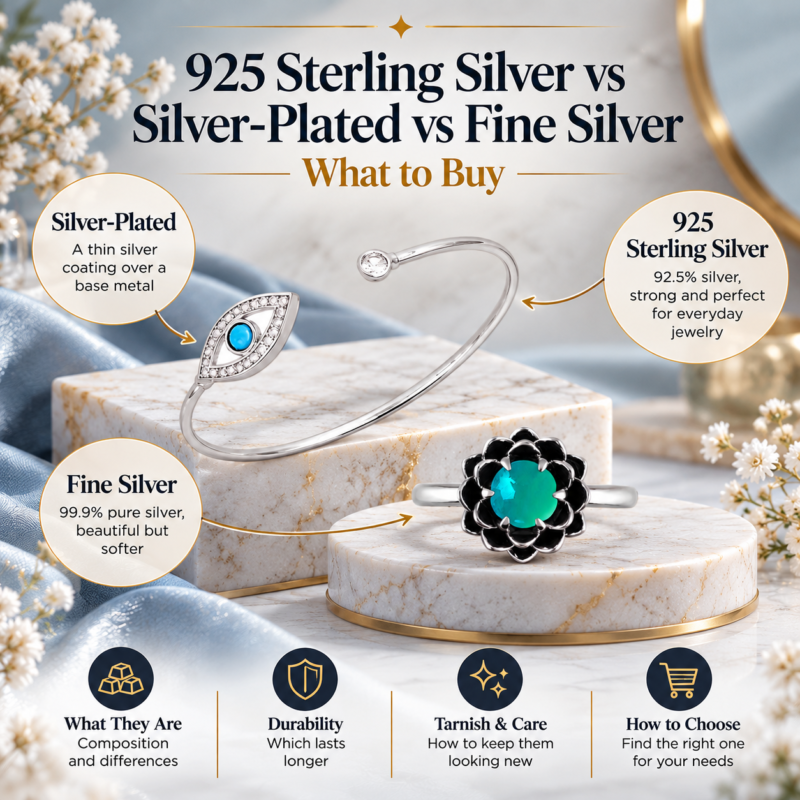
The “925” stamp means the metal is 92.5% pure silver and 7.5% other metals. That 7.5% is usually copper, which adds strength so rings and clasps don’t bend out of shape. Some makers use small amounts of zinc or germanium in the mix instead.
Pure silver itself is rarely the issue for people with sensitive skin. Reactions usually come from three places:
- The alloy: the copper (or other metals) in that 7.5%.
- The parts that aren’t silver: earring backs, clasps, jump rings, or pin stems made from a cheaper base metal.
- The surface: plating, tarnish, or leftover lotion and soap trapped against your skin.
So when you shop 925 sterling silver jewelry, you’re starting with a metal that’s mostly silver, which is a good foundation. The details below help you narrow it down further.
Why Your Skin Might React to Silver Jewelry
Nickel is the usual suspect
Nickel is one of the most common causes of metal-related skin irritation. Sterling silver normally isn’t made with nickel, which is why a lot of people who can’t wear costume jewelry do fine with 925. The catch is that nickel can still turn up in plated base-metal pieces sold as “silver,” in findings and clasps, or in an alloy from a less careful manufacturer. If you know you’re sensitive to nickel, it’s worth asking what the alloy and the findings are made of.
Green or black marks aren’t always an allergy
A green ring around your finger is usually the copper in the alloy reacting with sweat, lotion, or humidity. Black or gray smudges are typically tarnish (silver reacting with sulfur in the air) rubbing off onto your skin. Both are surface discoloration rather than an allergic reaction, and both wash off with soap and water.
Trapped moisture and residue
Wide bands and snug rings hold water, soap, and hand cream against your skin. That can cause redness under the ring even when the metal itself isn’t the problem. People often blame the silver when the real cause is the soap they never fully rinse out.
Plating that has worn through
Silver-plated jewelry is a thin layer of silver over a base metal like brass or copper. Once the plating wears off, your skin is touching whatever’s underneath, and that’s when itching often starts. This is one big reason to look for solid 925 rather than “silver-tone” or “silver-plated” pieces.
Reaction or Discoloration? A Quick Comparison
| What you notice | Likely cause | What to try |
|---|---|---|
| Green mark on your finger, no itching | Copper in the alloy reacting with moisture or lotion | Clean the ring, keep it dry, apply lotion after putting it on and letting it absorb |
| Gray or black smudge on skin | Tarnish rubbing off | Polish with a silver cloth, store the piece in an airtight bag |
| Redness only under a wide band | Trapped soap, water, or sweat | Take the ring off to wash hands, dry the skin and band fully |
| Itchy, red, or bumpy skin where metal touches | Possible metal sensitivity (often nickel), or worn plating | Stop wearing the piece and check with a dermatologist or doctor |
| Sore earlobes only with certain earrings | Earring post or back made from a different metal | Confirm the post is sterling or switch to a different post material |
This table is a general guide, not a diagnosis. If irritation is persistent, spreading, or painful, a dermatologist can do patch testing to tell you exactly which metals to avoid.
How to Choose Silver Jewelry for Sensitive Skin
Look for the stamp and the listing details
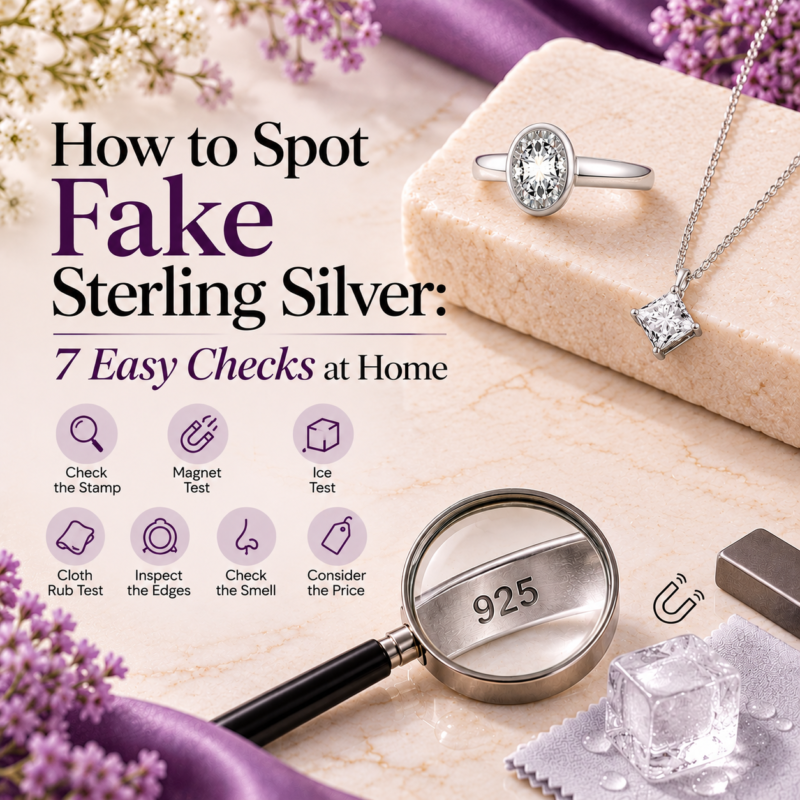
Real sterling is usually stamped “925,” “S925,” or “Sterling” somewhere discreet, like inside a ring band or on a clasp tag. Online, check that the product description says 925 sterling silver, not “silver-tone,” “silver color,” or “silver-plated.”
Check the earring posts and findings
Earrings matter most because the post sits inside a pierced hole for hours. Make sure the post and back are sterling too, not just the decorative front. The same goes for clasps on bracelets and necklaces that rest against the back of your neck.
Consider rhodium-plated sterling
Many sterling pieces are finished with a thin layer of rhodium, a bright white metal in the platinum family. It gives a mirror-like shine, slows tarnish, and adds a barrier between your skin and the copper in the alloy. Keep in mind that plating wears with time, especially on rings, so it may need redoing after a year or two of daily wear.
Be careful with gold-plated or vermeil silver
Gold vermeil is sterling silver with a gold layer on top. It isn’t solid gold, and the gold layer can contain other alloy metals. If you react to some gold jewelry, read the listing closely or stick with plain or rhodium-finished sterling.
Start small
Not sure how your skin will respond? Try a smaller piece first, like a pair of studs or a thin chain, and wear it for a few hours before committing to all-day wear.
How to Wear Sterling Silver Comfortably Every Day
- Put jewelry on last. Let lotion, sunscreen, perfume, and hair products dry before you add rings and necklaces.
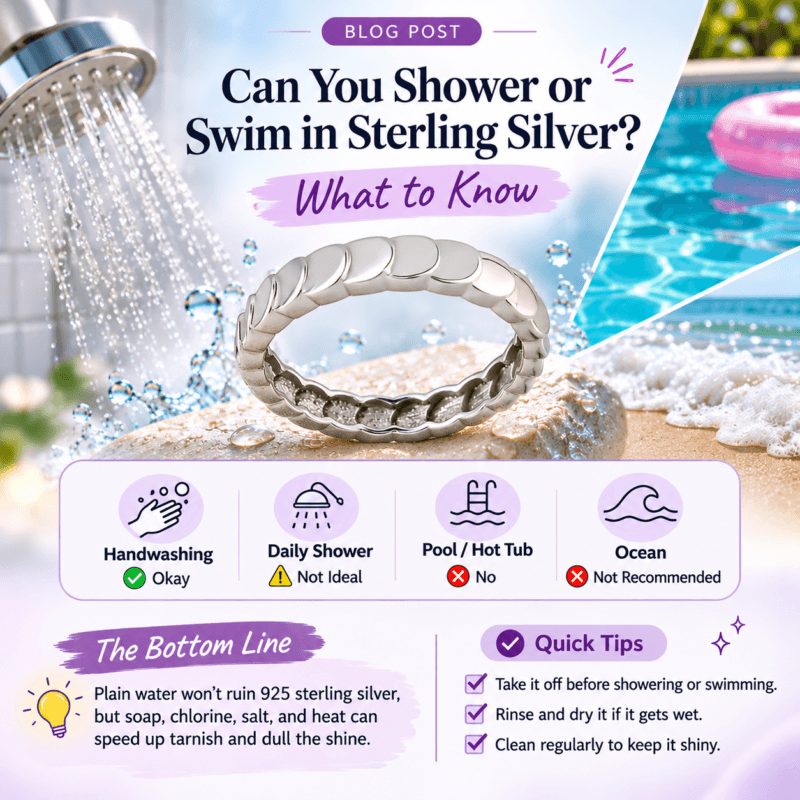
- Take rings off to wash your hands. It’s the easiest way to stop soap from building up under a band.
- Dry pieces after sweating. A quick wipe after the gym or a hot day keeps copper from reacting with moisture.
- Clean regularly. Mild dish soap, warm water, a soft brush, then dry completely. Skip harsh dips on pieces with soft stones.
- Store pieces in airtight bags. Less tarnish means less black residue on your skin.
- Give your skin a break. If you wear a ring 24/7, take it off at night now and then so the skin underneath can breathe.
Common Mistakes to Avoid
- Assuming “silver” means sterling. Fashion jewelry labeled “silver” may just be silver-colored.
- Ignoring the earring backs. A sterling earring with a base-metal back can still irritate your ears.
- Sleeping and showering in snug rings. Constant moisture under the band is a common cause of redness.
- Toughing it out. If a piece makes your skin itch or blister, take it off. Jewelry should feel good to wear.
Once you know what to look for, sterling silver can be one of the easiest metals to live in. Keep the posts in mind, keep your pieces clean and dry, and build from there. A great place to start is a pair of minimalist sterling silver studs, which are small, light, and easy to test on sensitive ears.
Frequently Asked Questions
Is sterling silver hypoallergenic?
Not automatically. Sterling silver is 92.5% silver and is often a good option for sensitive skin, but the remaining 7.5% alloy and any findings can vary by maker. If you have a known metal allergy, ask what the alloy and clasps or posts are made of before buying.
Does 925 sterling silver contain nickel?
Sterling silver is usually alloyed with copper, not nickel. Nickel can still appear in plated pieces, base-metal findings, or alloys from some manufacturers. When in doubt, check the product details or contact the seller.
Why does my sterling silver ring turn my finger green?
The copper in the alloy can react with sweat, lotion, or humidity and leave a green tint on your skin. It washes off with soap and water. Keeping the ring clean and dry, and letting lotion absorb before you put the ring on, usually helps.
Can I wear sterling silver earrings if I have sensitive ears?
Many people with sensitive ears wear sterling studs comfortably. Make sure both the post and the back are sterling, keep them clean, and start with a few hours of wear. If your ears still get sore or itchy, stop wearing them and check with a dermatologist.
Does rhodium plating help with sensitive skin?
Rhodium plating adds a thin barrier between your skin and the alloy underneath, and some people find plated pieces more comfortable. The layer wears down over time, especially on rings, so it may need re-plating after long-term daily wear.