Blog
Earring Size Guide: Hoop Diameters and Stud Sizes Explained

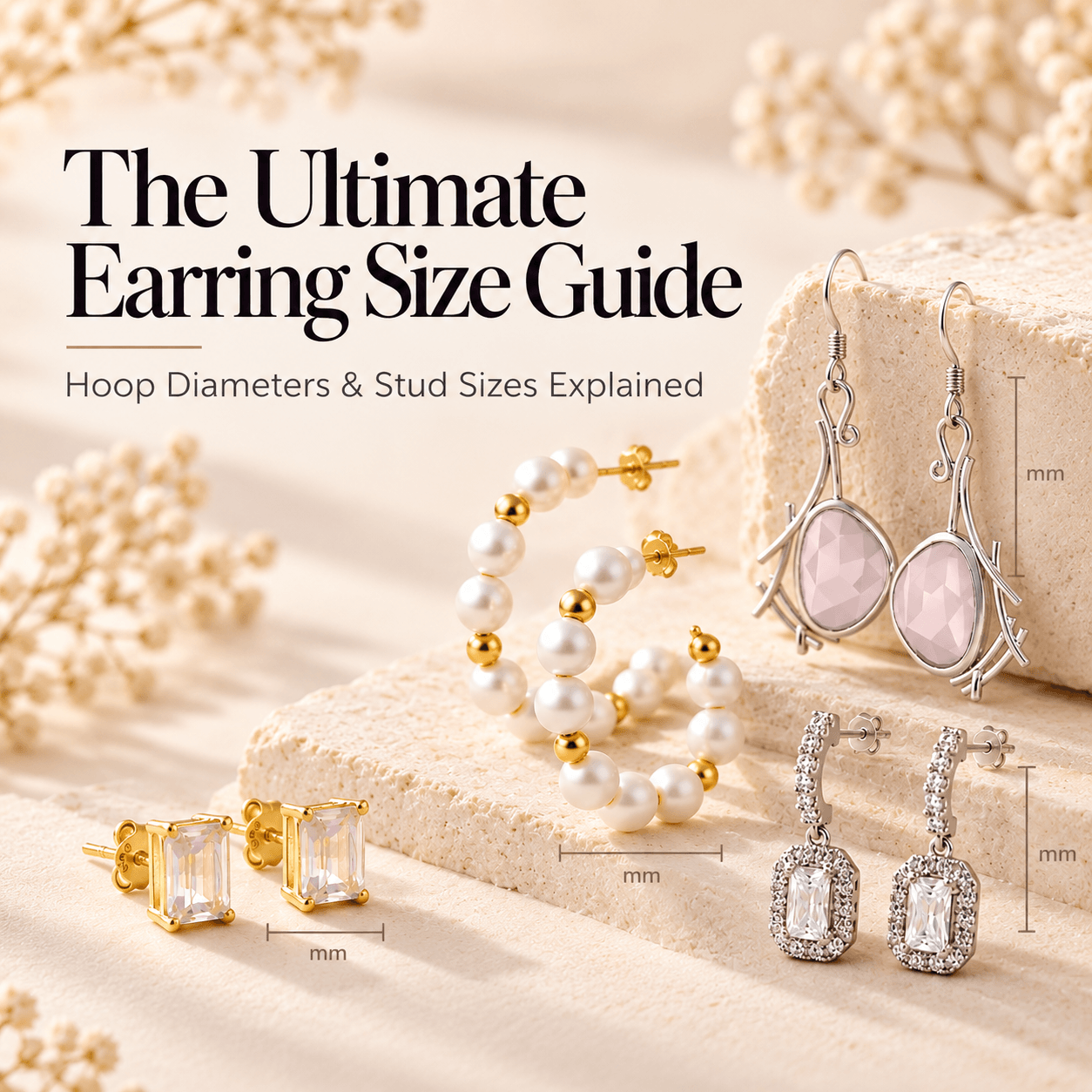
You’ve found a pair of earrings you love online, and the listing says “20mm.” Is that a dainty huggie or a hoop that brushes your jaw? Millimeters are hard to picture, and that’s why so many earrings go back in the mail. This earring size guide turns earring measurements into something you can actually see: common stud and hoop sizes, how to measure the pairs you already own, and a few fit details most size charts skip.
The Quick Answer
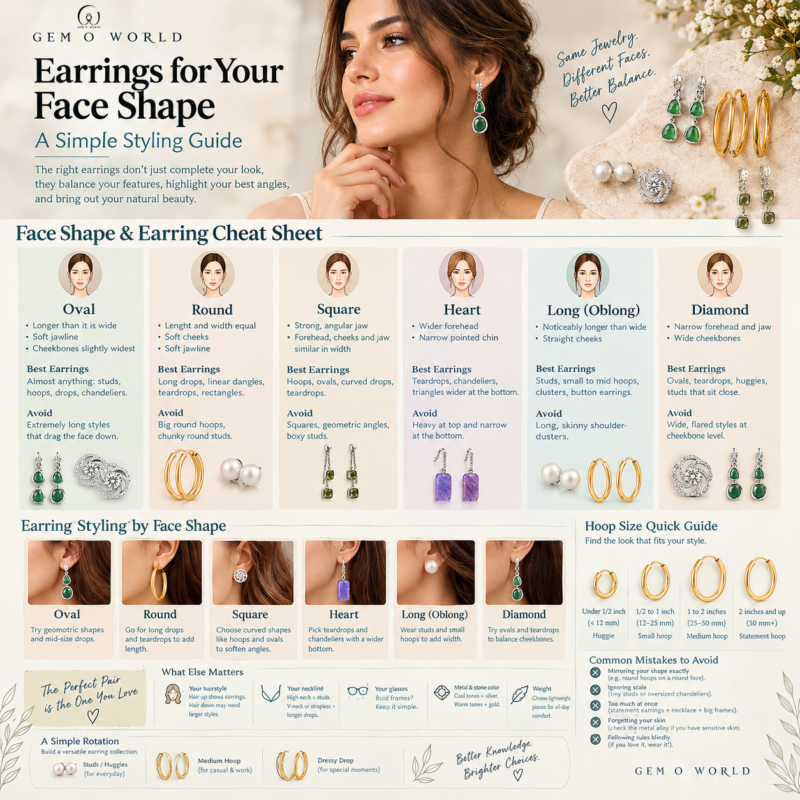
For a first pair of everyday studs, most people land on 4–6mm. For hoops, 10–12mm hugs the lobe, 15–25mm is the everyday sweet spot, and anything past 40mm is a statement. If you want to compare before you commit, browse our women’s earrings collection with a ruler or a coin nearby. It makes those numbers a lot less abstract.
A few terms worth knowing before you shop:
- Diameter: the width of a hoop measured straight across the outside edge, from one side to the other.
- Thickness: how wide the metal tube or band of a hoop is. A 30mm hoop that’s 1.5mm thick looks very different from one that’s 5mm thick.
- Drop length: how far a dangle or drop earring hangs, usually measured from the top of the ear wire or post to the bottom of the design.
- Gauge: the thickness of the post or wire that goes through your piercing.
How to Measure Earrings at Home
The easiest reference is a pair you already wear and like. Here’s how to size it:
- Lay the earring flat on a table with good light.
- For hoops, measure the outside edge straight across at the widest point. Retailers usually list the outside diameter, so that’s the number you’ll compare against.
- For studs, measure the face of the stone or design across its widest point, not the back or the post.
- For drops, measure from the top of the hook or post down to the lowest point of the design.
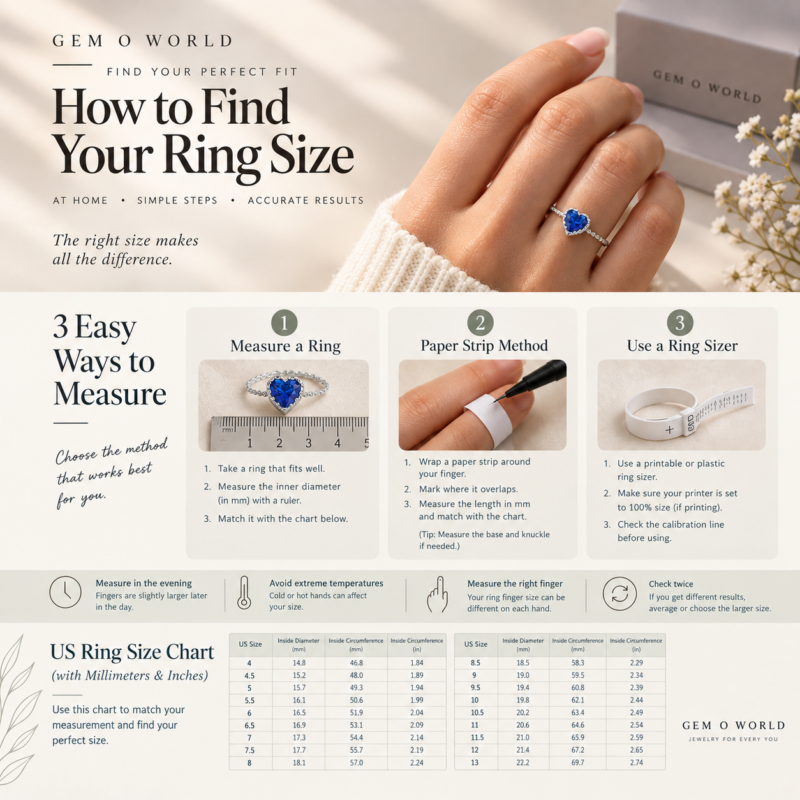
- Write it down in millimeters. Most rulers have a metric side, and 1 inch equals 25.4mm.
No ruler handy? US coins make a surprisingly good stand-in:
- A dime is about 18mm across
- A penny is about 19mm
- A nickel is about 21mm
- A quarter is about 24mm
Hold a coin up to your earlobe in the mirror and you’ll get a quick feel for how a 20mm or 25mm hoop will sit.
Hoop Earring Size Chart
| Diameter (mm) | Approx. inches | How it looks | Best for |
|---|---|---|---|
| 8–10mm | 0.3–0.4 in | Hugs the lobe closely (huggie) | Second and third piercings, sleeping in, minimalists |
| 12–15mm | 0.5–0.6 in | Small, sits just below the lobe | Everyday wear, office, stacking |
| 18–25mm | 0.7–1 in | Classic small-to-medium hoop | The all-purpose hoop for most outfits |
| 30–35mm | 1.2–1.4 in | Noticeable, swings a little | Weekend looks, hair pulled back |
| 40–50mm | 1.6–2 in | Bold, frames the face | Evenings, simple outfits that need a focal point |
| 60mm+ | 2.4 in+ | Statement, may graze the jaw or shoulder | Parties, photos, confident dressers |
Keep in mind that the same diameter reads differently depending on the person. On a petite frame or with a short neck, a 40mm hoop can look dramatic. On someone tall with long hair, it may barely show.
Thickness changes everything
Two hoops with the same diameter can feel like completely different earrings. A thin 1–2mm hoop looks delicate and light even at 40mm. A chunky 4–6mm hoop looks bold even at 20mm, and it weighs more. If you’re between sizes, a slimmer profile is usually the safer pick for daily wear.
Stud Earring Size Chart
| Stud size (mm) | Approx. inches | How it looks |
|---|---|---|
| 3mm | 0.12 in | A tiny sparkle, great for upper ear and kids |
| 4mm | 0.16 in | Subtle and polished, easy everyday choice |
| 5–6mm | 0.2–0.24 in | Clearly visible without being flashy |
| 7–8mm | 0.28–0.31 in | Noticeable, covers much of a smaller lobe |
| 10mm+ | 0.4 in+ | Statement studs, often for evening or a dressed-up look |
Stone shape matters too. An oval, pear, or marquise stone measured at 6x4mm looks longer and slimmer than a 5mm round. And a halo setting adds visible size around the center stone, so check whether the listing gives the stone size or the full setting size.
Post Gauge and Length: The Part Nobody Mentions
Most fine jewelry studs and hoops use a post around 20 gauge (about 0.8mm), which suits a standard healed lobe piercing. A few things to watch:
- Thicker posts (18 gauge, about 1mm) can feel tight or sore in a piercing that’s used to thinner jewelry.
- Thinner wires (22 gauge, about 0.6mm) are common on hooks and very light hoops. They’re comfortable, but bend more easily, so handle them gently.
- Post length is usually about 10–11mm. If you have thicker lobes, look for that measurement in the listing so the back doesn’t pinch.
Not sure about your piercing’s gauge? If standard earrings slide in comfortably, you’re almost certainly in the 20-gauge range.
Weight, Comfort, and Your Earlobes
Size isn’t only about looks. Heavier earrings pull on the lobe and, over time, can stretch a piercing. A few practical tips:
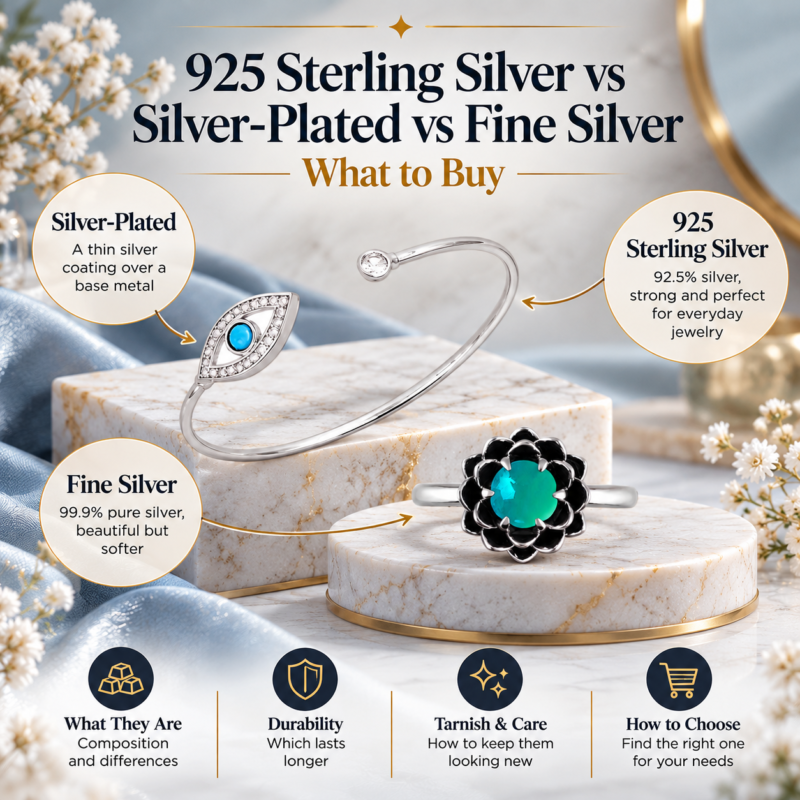
- 925 sterling silver (92.5% silver alloyed with other metals, usually copper) is a nice balance of durability and wearable weight for medium and large hoops.
- Hollow hoops look big but feel light. Solid hoops of the same size are heavier and more durable.
- Big drops with large stones are best saved for a few hours rather than all day.
- Sensitive ears? Sterling silver is often a good option for many people, but alloys vary, so check the product details and take earrings out if you notice redness or itching.
Fit Tips for Common Situations
Multiple piercings
Build from small to large going down: a 3mm stud or 8mm huggie up top, a 10–12mm hoop in the middle, and your main pair (4–6mm stud or 15–20mm hoop) in the lobe. Keeping a clear size step between each hole looks intentional rather than cluttered.
Low or small lobes
If your piercing sits close to the edge of the lobe, very small huggies (under 10mm) may pinch. Try 11–12mm instead, or a hoop with a slightly larger inner diameter.
Glasses and face masks
Large hoops can tangle with ear loops and catch on glasses arms. Studs and small hoops under 20mm are the low-hassle choice for long workdays.
Gifting when you don’t know their style
A 5mm stud or an 18–20mm hoop is the safest middle ground. It’s visible enough to feel like a real gift and small enough to fit most wardrobes.
Common Sizing Mistakes to Avoid
- Judging size from a close-up product photo. Zoomed images make everything look bigger. Check the listed millimeters.
- Ignoring drop length on dangles. A 1-inch drop and a 2-inch drop are very different on the ear.
- Forgetting the closure. Hinged huggies, click-tops, and latch-back hoops all wear slightly differently, even at the same diameter.
- Buying the biggest size “to make a statement.” Comfort matters. If it hurts by lunch, it won’t get worn.
Putting It All Together
Once you know your favorite numbers, shopping gets much easier. Measure the pair you reach for most, jot down the diameter or stud size, and use it as your baseline. Go a step up for evenings and a step down for extra piercings. If you’re ready to try something with a bit of movement, take a look at our dangle earrings for women, and use the drop length tips above to find the one that sits just right.
Frequently Asked Questions
What size hoop earrings are most popular?
Hoops between about 15mm and 25mm are the most common everyday choice. They’re visible without being heavy, and they work with both casual and work outfits. Many people then add a larger pair for evenings.
Is hoop earring size measured on the inside or outside?
Most jewelers list the outside diameter, measured across the widest outer edge. Inner diameter matters mostly for huggies and tight-fitting hoops, where it affects how snugly the hoop wraps your lobe. If a listing isn’t clear, it’s worth asking before you buy.
What size stud earrings should I get for everyday wear?
For everyday studs, 4mm to 6mm suits most people. Smaller sizes look neat in upper piercings, while 7mm and above start to read as a dressier look. Smaller lobes usually look balanced with the lower end of that range.
Can I sleep in huggie hoop earrings?
Many people sleep in small, smooth huggies because they sit close to the ear and don’t catch easily. That said, taking jewelry off at night reduces wear on the clasp and gives your piercings a break. If a pair ever feels sore or snags on your pillowcase, take it out.