Blog
Gemstone Colors for Your Skin Tone: A Simple Matching Guide

Ever bought a gemstone ring that looked stunning online, then felt a little “off” once it was on your hand? Nine times out of ten, the stone wasn’t the problem. It was the pairing between the color of the stone, the metal it’s set in, and the undertone of your skin. The good news: once you know your undertone, picking flattering gemstone colors gets a lot easier, and shopping for yourself (or someone else) stops feeling like a guessing game.
Start Here: Skin Tone vs. Undertone
Your skin tone is the surface shade you see in the mirror: fair, light, medium, olive, tan, deep. It can shift with the seasons. Your undertone is the subtle hue underneath, and it stays the same whether you’re pale in February or sun-kissed in August. Undertone is what matters most for jewelry.
There are three main undertones:
- Cool: pink, red, or bluish hints
- Warm: golden, peachy, or yellow hints
- Neutral: a balanced mix of both, sometimes with an olive cast
Any skin tone can have any undertone. Fair skin can be warm, deep skin can be cool, and plenty of people land right in the middle. If you want to experiment before committing, browsing our gemstone jewelry collection by color is an easy way to see which shades you keep gravitating toward.
How to Find Your Undertone at Home
You don’t need a color consultant. Try two or three of these in natural daylight, with a bare face and no self-tanner:
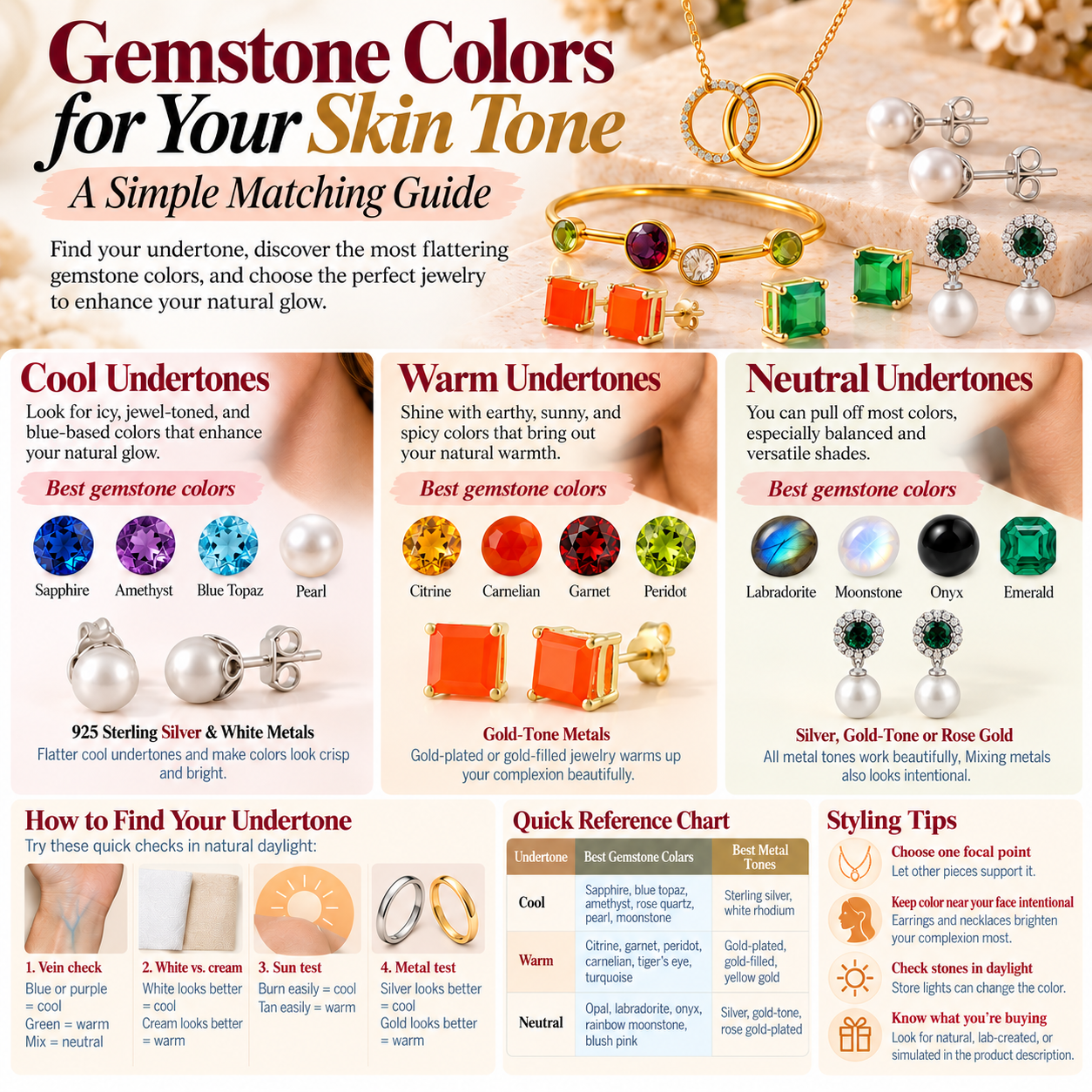
- The vein check. Look at the inside of your wrist. Mostly blue or purple veins usually point to cool. Mostly green suggests warm. Hard to tell, or a mix? Likely neutral.
- The white vs. cream test. Hold a bright white T-shirt next to your face, then an off-white or cream one. If bright white makes you look fresh, you’re probably cool. If cream looks better and white washes you out, you’re probably warm.
- The sun test. Do you tend to burn and turn pink? That often leans cool. Tan easily and turn golden? Often warm.
- The metal test. Hold a silver piece and a gold-tone piece against your wrist. The one that makes your skin look brighter and more even is a strong hint.
No single test is perfect. Go with the answer that shows up most often.
Gemstone Colors for Cool Undertones
Cool undertones shine next to icy, jewel-toned, and blue-based colors. These shades echo the pink and blue in your skin, so your complexion looks clear rather than sallow.
- Blues: sapphire, blue topaz, aquamarine, lapis lazuli
- Purples: amethyst, especially the deeper grape shades
- Pinks: rose quartz, pink tourmaline, pink cubic zirconia
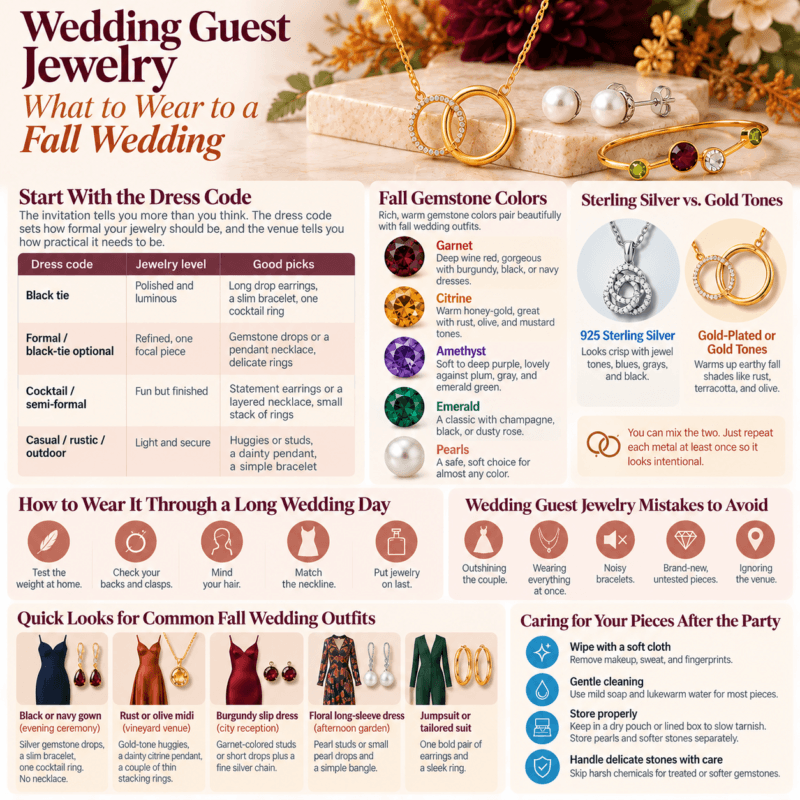
- Clear and white: diamond, white topaz, clear quartz, moonstone, white pearl
- Cool greens: emerald with a blue-green cast
Metal match: 925 sterling silver and white rhodium-plated silver are the natural pairing. The bright white finish of rhodium plating makes blue and purple stones look especially crisp.
Gemstone Colors for Warm Undertones
Warm undertones come alive with earthy, sunny, and spicy colors. Think autumn leaves and golden hour.
- Yellows and oranges: citrine, carnelian, imperial or golden topaz
- Browns and golds: tiger’s eye, smoky quartz
- Warm greens: peridot, moss agate, olive-toned jade
- Reds: garnet, red jasper, warm-leaning ruby
- Turquoise: especially greener stones with brown or golden matrix
Metal match: gold-tone finishes flatter warm skin. If you love the durability of sterling silver, gold-plated or 18k gold-filled sterling gives you that warm glow with a silver base. Just keep in mind plated pieces aren’t solid gold, and the plating can wear with heavy use.
Gemstone Colors for Neutral Undertones
Lucky you. Neutral undertones can pull off most colors, which makes it the easiest group to shop for. Your sweet spot tends to be stones that are balanced themselves:
- Labradorite and rainbow moonstone, with their shifting flashes
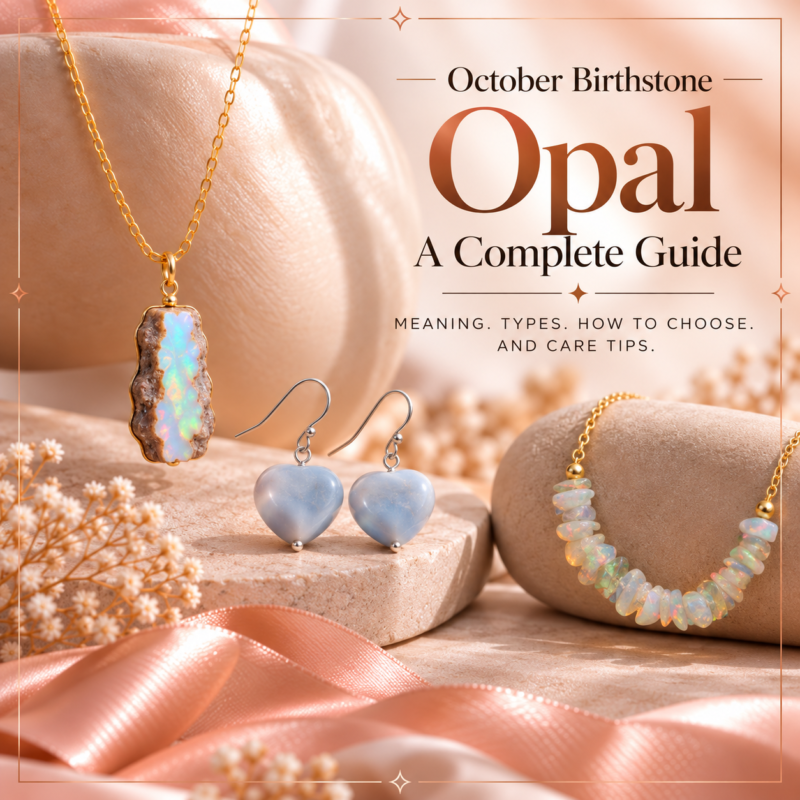
- Opal, which plays every color at once
- Black onyx and other true-black stones
- Soft blush pinks and medium blues
- Champagne and smoky tones
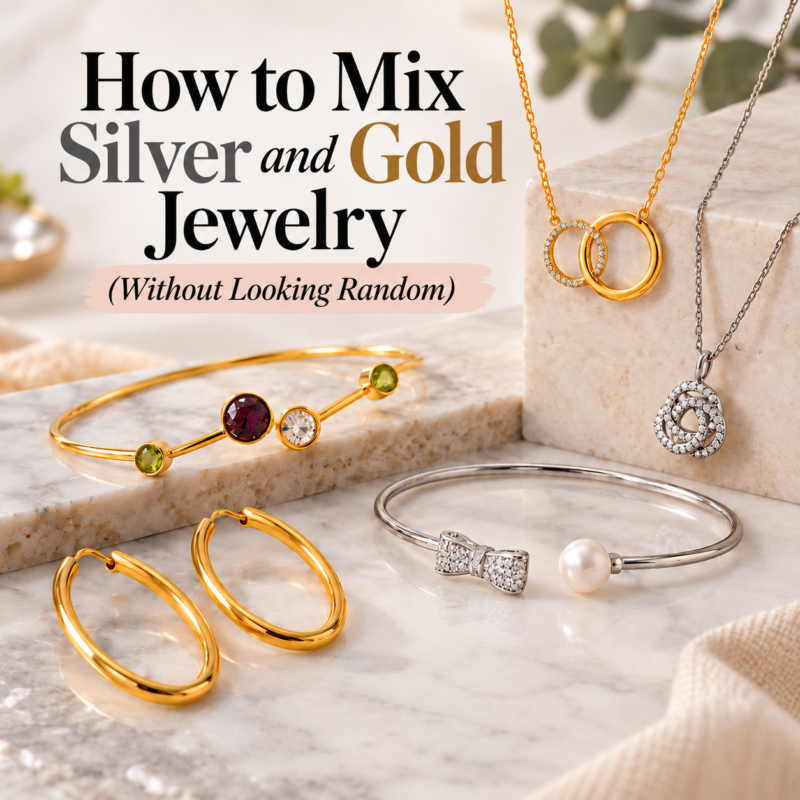
Metal match: silver, gold-tone, and rose gold-plated all work. Mixing metals in one look is easy for you, too.
Quick Reference: Undertone and Gemstone Chart
| Undertone | Most Flattering Stones | Best Metal Tones | Colors to Use Carefully |
|---|---|---|---|
| Cool | Sapphire, blue topaz, amethyst, rose quartz, pearl, moonstone | Sterling silver, white rhodium | Bright orange, mustard yellow |
| Warm | Citrine, garnet, peridot, carnelian, tiger’s eye, turquoise | Gold-plated, gold-filled, yellow gold | Icy pastels, very cool pinks |
| Neutral | Opal, labradorite, onyx, rainbow moonstone, blush pink | Silver, gold-tone, rose gold-plated | Very few; trust your eye |
What About Deep, Medium, and Fair Skin?
Undertone gets you most of the way there. Depth (how light or dark your skin is) fine-tunes it.
Fair skin
Soft and medium saturations look balanced. Very dark stones can create high contrast, which is fine if you love drama, but pale aquamarine, light amethyst, and pearls tend to look effortless.
Medium and olive skin
Rich jewel tones are your friend. Emerald, ruby-red, sapphire blue, and turquoise all hold their own without overpowering.
Deep skin
Saturated, bold colors look incredible: vivid citrine, deep emerald, cobalt blue, and bright white stones that pop against the skin. Pale pastels can sometimes look a bit chalky, so go for clearer, more intense shades.
Styling Tips and Mistakes to Avoid
- Keep color near your face intentional. Earrings and necklaces affect how your complexion reads far more than rings or bracelets. Save “experimental” colors for your hands.
- Don’t overthink your birthstone. If your birthstone isn’t in your best color family, wear it on a ring or bracelet, or choose a lighter or darker version of the stone.
- Check stones in daylight. Store lights and phone screens can shift color. Look at a piece near a window before deciding.
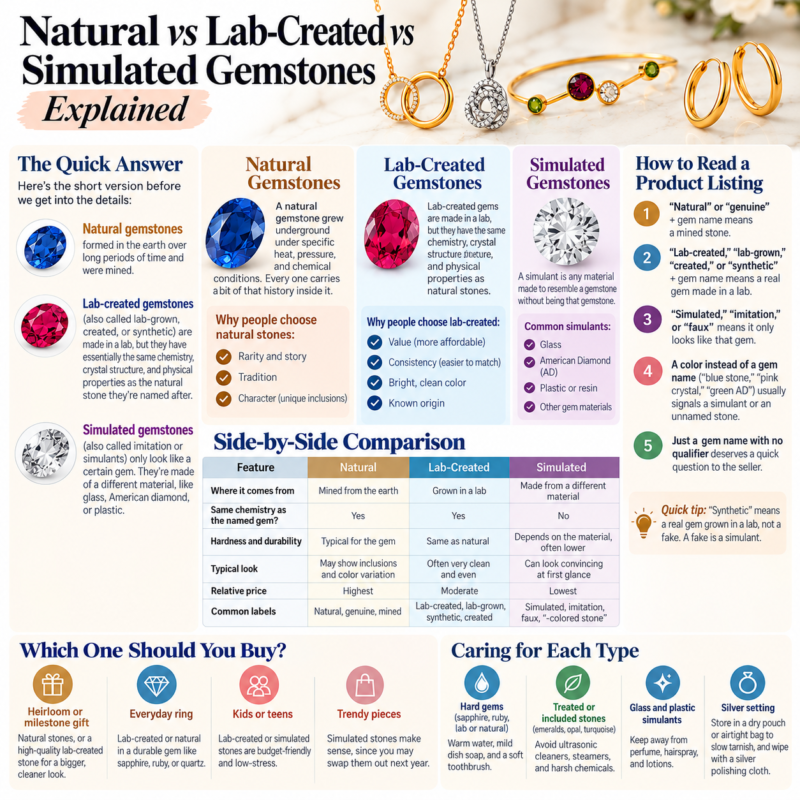
- Know what you’re buying. Natural, lab-created, and simulated stones can look very similar. Check the product description so you know exactly which one you’re getting.
- Rules are a starting point. If you love a color and feel great in it, wear it. Confidence beats any chart.
Shopping for Someone Else
Gifting season is coming up fast, and undertone is a smart shortcut when you’re buying for a friend, partner, or mom. Picture the metal she already wears most. Mostly silver usually means cool or neutral; mostly gold usually means warm or neutral. Pair that with a stone from the matching list above and you’re very likely to land on something she’ll actually reach for. If you’re still unsure, earrings are a safe bet because they sit right by the face where flattering color matters most, and you can browse gemstone earrings for women by shade to find a good match.
Frequently Asked Questions
Can I wear silver jewelry if I have warm undertones?
Absolutely. Warm undertones don’t rule out silver; they just tend to look extra glowing in gold tones. Try silver with warm stones like garnet, citrine, or carnelian to bridge the gap. Oxidized or darker silver finishes can also look softer on warm skin than very bright white silver.
What gemstone color looks good on everyone?
Pearls, clear white stones, black onyx, and medium greens like emerald are widely flattering because they don’t lean strongly warm or cool. Multicolor stones like opal and labradorite are also easy to wear. They’re a safe choice when you’re buying a gift and don’t know the recipient’s undertone.
Does my undertone change when I get a tan?
Usually not. A tan changes your surface skin tone, but your undertone typically stays the same. You might notice bolder, more saturated stones look better in summer, but your best color family generally holds year-round.
Is rose gold better for warm or cool skin tones?
Rose gold sits in the middle, which is why it’s so popular. It often flatters neutral undertones most, but its pink warmth can work for both warm and cool skin. On sterling silver, rose gold finishes are usually plating, so expect occasional touch-ups with frequent wear.