Blog
Can You Shower or Swim in Sterling Silver? What to Know

You hop in the shower, glance down, and realize your favorite silver ring is still on. Or you’re halfway into the hotel pool before you remember your necklace. Is it ruined? Almost certainly not. But water, and especially what’s in the water, does affect sterling silver over time. Here’s what actually happens when silver gets wet, which situations are fine, which ones to skip, and how to fix things if you forgot.
The Quick Answer
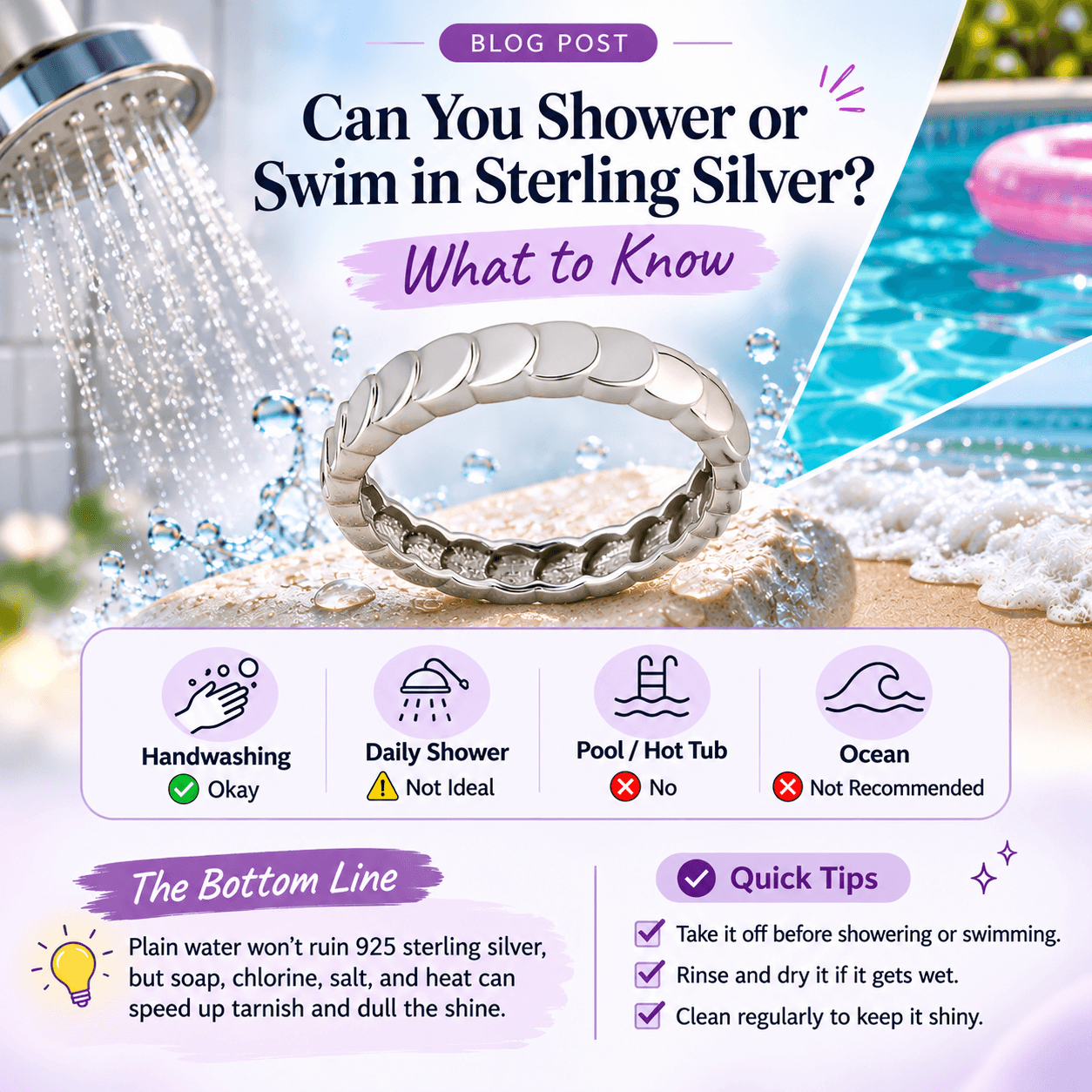
Plain water won’t hurt 925 sterling silver jewelry. A quick rinse or the occasional shower with a ring on isn’t going to damage it. The trouble comes from everything that travels with the water: soap and shampoo residue, hard-water minerals, chlorine in pools and hot tubs, and salt at the beach. Those speed up tarnish, dull the shine, and can be rough on gemstones and plated finishes.
So the honest answer is: you can, but for pieces you love, especially anything with stones or plating, it’s better to take them off first.
| Situation | Okay for sterling silver? | Why |
|---|---|---|
| Washing your hands | Yes, usually | Brief contact with water and mild soap. Dry rings afterward. |
| Daily shower | Not ideal | Soap film and hard-water minerals build up and dull the finish. |
| Pool or hot tub | No | Chlorine reacts with silver and can darken it fast. |
| Ocean | Not recommended | Salt and sand speed up tarnish and scratch polished surfaces. |
| Sauna or steam room | No | Heat plus humidity speeds up tarnish; metal also gets hot against skin. |
| Workouts | Not ideal | Sweat contains salts, and weights can bend or scratch pieces. |
Why Water Makes Silver Tarnish Faster
925 sterling silver is 92.5% pure silver and 7.5% other metals, usually copper. Pure silver is too soft for everyday jewelry, so that small amount of alloy makes it strong enough to wear. The catch is that silver reacts with sulfur compounds in the air, and the copper reacts with moisture and oxygen. That reaction is the dark film we call tarnish.
Water on its own is mostly a carrier. What speeds things up is what it brings along:
- Chlorine: Pools and hot tubs are the biggest offenders. Chlorine can turn silver dark or dull surprisingly quickly, and repeated exposure may leave the surface looking pitted or uneven.
- Soap and shampoo: They leave a thin film, especially behind stones and inside ring bands, that makes silver look cloudy.
- Hard-water minerals: Calcium and magnesium can leave chalky spots that stick around after the water dries.
- Salt water and sweat: Both contain salts that keep the surface damp longer and encourage tarnish.
- Heat and humidity: A hot shower or steamy bathroom adds warmth and moisture, a combo that speeds up the reaction.
Tarnish on solid sterling is surface-level and can be cleaned off. It’s annoying, not permanent.
It’s not just the silver you need to think about
Many silver pieces include gemstones, plating, or glue, and these are usually more sensitive to water than the metal itself.
- Soft or porous stones: Opal, turquoise, pearl, and moonstone don’t love long soaks, harsh soaps, or chlorine. Turquoise and pearls can absorb residue and change color, and opal is sensitive to sudden temperature changes.
- Glued settings: Some pieces use adhesive behind a stone or pearl. Repeated soaking can weaken it over time.
- Plated finishes: Gold-plated, vermeil, and rhodium-plated silver have a thin outer layer. Chlorine, soap, and friction can wear it down faster, exposing the silver underneath.
- Oxidized details: The darkened recesses on some designs are intentional. Heavy scrubbing after a swim can lift them.
So, Can You Shower in Sterling Silver?
An occasional shower won’t ruin a solid sterling piece. Making it a daily habit is where you’ll notice the difference: rings get a dull film, chains lose their sparkle, and tarnish shows up sooner than it would otherwise.
A few practical exceptions:
- Tiny studs you sleep and shower in: Many people leave small sterling studs in all the time. If you do, rinse with plain water after shampooing and dry your ears well.
- Plain bands you never take off: If you wear one constantly, plan to clean it more often, every week or two.
- Anything with stones, pearls, or plating: Take it off. These are the pieces that show water damage first.
Can You Swim in Sterling Silver?
This is the one where we’d say a clear no. Pools and hot tubs use chlorine, and chlorine is much harsher on silver than tap water. Even one long swim can leave a piece noticeably darker. Hot tubs are worse, since the heat speeds up the reaction.
The ocean is gentler than a pool but still not great. Salt water encourages tarnish, sand scratches polished surfaces, and cold water makes your fingers shrink, which is exactly how rings slip off and disappear into the waves. If you want to wear jewelry at the beach, keep it simple and put it on after you’re out of the water and dry.
Forgot to Take It Off? Here’s How to Fix It
It happens to everyone. Act quickly and most pieces bounce right back.
- Rinse it in clean, lukewarm water. This removes chlorine, salt, or soap residue before it sits on the surface.
- Wash gently if needed. Add a drop of mild, unscented dish soap to a bowl of lukewarm water, swish the piece around, and use a soft baby toothbrush on solid silver areas. Skip the soak for pearls, opal, and turquoise; wipe those with a damp soft cloth instead.
- Dry it completely. Pat with a lint-free cloth, then let it air-dry for a bit so water doesn’t stay trapped under stones or in chain links.
- Polish solid sterling. A silver polishing cloth takes care of light tarnish. Use it gently on plated pieces, since polishing can wear thin plating.
- Store it dry. Put it back in a pouch or lined box, not on the bathroom counter.
If a piece has turned very dark after a swim, a polishing cloth and some patience usually help. For stubborn tarnish around stones or on plated pieces, a local jeweler can clean it safely.
Cleaning do’s and don’ts after water exposure
| Do | Don’t |
|---|---|
| Rinse in plain lukewarm water | Leave chlorine or salt to dry on the piece |
| Use mild, unscented dish soap | Use bleach, toothpaste, or baking soda paste |
| Dry with a soft, lint-free cloth | Soak pearls, opal, or turquoise |
| Use a silver polishing cloth on solid sterling | Scrub plated or oxidized areas hard |
| Let pieces air out before storing | Store damp jewelry in a closed box or bag |
How to Prevent Water Damage Going Forward
Small habits do most of the work here.
- Make jewelry the last thing on and first thing off. Put it on after showering, lotion, and perfume. Take it off before you wash your face or head to bed.
- Give it a landing spot. A small dish on your dresser or nightstand, away from the steamy bathroom, makes taking pieces off a habit instead of a chore.
- Pack a pouch for pool days and vacations. A zip bag or small travel case lets you take things off at the pool without setting them loose on a lounge chair.
- Wipe after workouts. If you wear a chain to the gym, wipe off sweat with a soft cloth afterward.
- Store pieces separately and dry. Anti-tarnish pouches or a lined box with an anti-tarnish strip help a lot, especially in humid climates.
- Clean on a schedule. A quick polish every couple of weeks keeps tarnish light and easy to remove.
If you want something you can wear with less fuss on busy days, simple designs without stones or plating are the easiest to look after. Our women’s plain rings are a nice place to start; just check each listing for the metal and finish so you know how to care for it.
Frequently Asked Questions
Will sterling silver turn green if it gets wet?
Sterling silver itself usually darkens rather than turning green. A green mark on your skin can come from the copper in the alloy reacting with moisture, sweat, or lotion. Keeping pieces dry and clean usually helps, and the mark washes off skin easily.
Can I wear my sterling silver necklace in the hot tub?
It’s best not to. Hot tubs combine chlorine or bromine with high heat, which can darken silver quickly and is especially hard on gemstones and plated finishes. Take it off and keep it somewhere dry until you’re done.
Is it okay to wash my hands with a sterling silver ring on?
Yes, for everyday hand washing it’s generally fine. Rinse away soap and dry the ring and your finger well, since trapped moisture under the band can cause tarnish and skin irritation. Remove it before using hand sanitizer heavily or cleaning with household chemicals.
Does tarnish from swimming come off sterling silver?
On solid sterling silver, tarnish from chlorine or salt water usually comes off with a rinse, a gentle wash, and a silver polishing cloth. Heavy or repeated exposure may need more patience or a professional cleaning. Plated pieces are trickier, because polishing can wear through the thin outer layer.