Blog
925 Sterling Silver vs Silver-Plated vs Fine Silver: What to Buy

Holiday shopping season is here, and if you’ve been browsing silver jewelry, you’ve probably seen three labels used almost interchangeably: sterling silver, silver-plated, and fine silver. They’re not the same thing at all. One can last for decades, one may start showing a different metal underneath within a year, and one is beautiful but a little too soft for some pieces. Here’s how to tell them apart before you buy, so the necklace you gift in December still looks great next December.
The Quick Answer
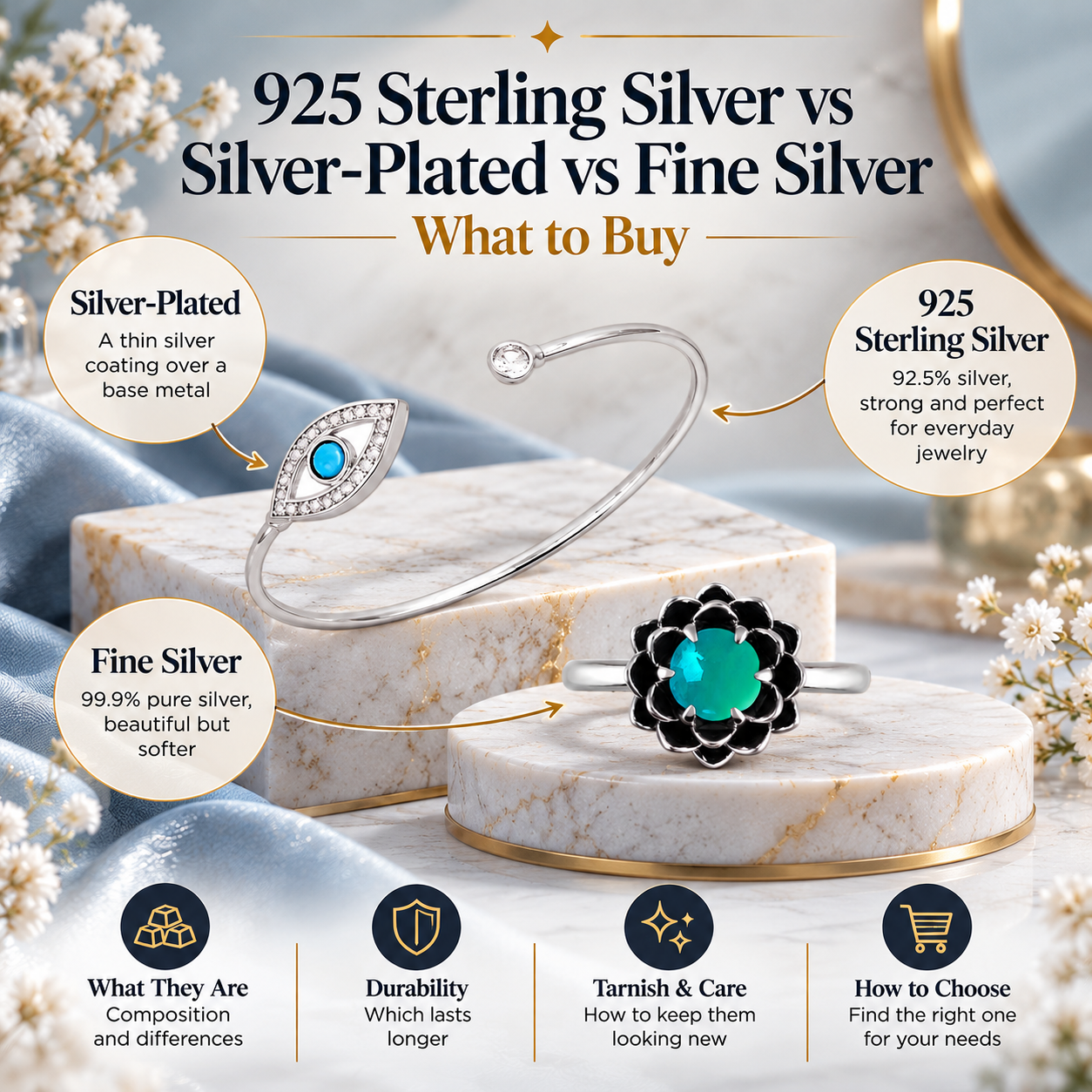
If you only remember one thing, make it this: 925 sterling silver is solid silver alloy all the way through, silver-plated is a thin silver coating over a different metal, and fine silver is nearly pure silver. For everyday jewelry, sterling usually hits the sweet spot of beauty, durability, and value, which is why most of our 925 sterling silver jewelry is made from it.
| Feature | Fine Silver | Sterling Silver | Silver-Plated |
|---|---|---|---|
| Silver content | 99.9% | 92.5% | A thin surface layer only |
| What’s underneath | Silver | The same alloy throughout | Base metal such as brass or copper alloy |
| Common stamps | 999, .999, FS | 925, .925, STER, Sterling | EP, EPNS, SP, “silver plated” |
| Hardness | Soft, scratches and bends easily | Strong enough for daily wear | Depends on the base metal |
| Tarnish | Slow to tarnish | Tarnishes over time, polishes back easily | Tarnishes, and the plating can wear through |
| Long-term value | High | Good | Low |
What Is Sterling Silver?
Sterling silver is an alloy made of 92.5% silver and 7.5% other metals, usually copper. That’s where the “925” stamp comes from: 925 parts silver out of 1,000. In the US, a piece marked “sterling” is expected to meet that 92.5% standard.
Why not just use pure silver? Pure silver is too soft for most jewelry. That small amount of copper makes the metal hard enough to hold a prong setting, keep a ring round, and survive being worn every day.
The trade-off is tarnish. Copper reacts with sulfur in the air, sweat, and some beauty products, so sterling can darken over time. The good news is that tarnish sits on the surface. A polishing cloth or a gentle cleaning brings the shine right back, because there’s silver underneath, not a different metal.
What about rhodium-plated sterling?
You’ll often see sterling silver listed as “rhodium plated” or “white rhodium.” This is still solid sterling silver underneath. Rhodium is a bright, white metal from the platinum family, applied as a thin finish to add extra shine and help slow down tarnishing. Over time, especially on rings and bracelets, that finish can wear in high-contact spots. When it does, the piece is still sterling. A jeweler can usually re-plate it if you want that bright white look back.
What Is Silver-Plated Jewelry?
Silver-plated jewelry has a very thin layer of silver bonded to a base metal, often brass, copper, or another alloy. It looks like silver when it’s new, and it’s usually much less expensive.
The catch is longevity. Friction from clothing, hand washing, lotion, and regular polishing gradually thins the coating. Eventually, you may start to see a yellowish or coppery color peeking through on edges, clasps, and the back of rings. Once the plating is gone, polishing won’t fix it.
Silver-plated pieces can be a fun choice for trend-driven styles you’ll only wear a few times. They’re just not the same as solid silver, and they shouldn’t be sold or gifted as if they were.
Don’t confuse “plated sterling” with “silver-plated”
This trips up a lot of shoppers. “Gold-plated sterling silver” or “rhodium-plated sterling silver” means the base is real 925 silver with a thin finish on top. “Silver-plated” means the base is not silver. The word order matters, so read product descriptions carefully.
What Is Fine Silver?
Fine silver is 99.9% pure silver, usually stamped 999 or .999. It has a slightly softer, whiter glow than sterling and tarnishes more slowly, since there’s very little copper to react.
Because it’s so soft, fine silver is more common in bullion, some handmade beads, and certain types of chain or wire work than in everyday rings. A fine silver ring can scratch, dent, or bend out of shape quickly, and it isn’t ideal for holding gemstones securely.
How to Tell Them Apart Before You Buy
You can’t always tell by looking, but these clues help a lot:
- Look for a stamp. Check the inside of a ring band, near a clasp, or on the back of an earring. “925,” “STER,” or “Sterling” points to sterling silver. “EP,” “EPNS,” or “SP” points to plating. Very tiny pieces sometimes have no room for a stamp, so ask the seller.
- Read the full product description. Look for the base metal, not just the color. “Silver tone” or “silver color” usually describes the look, not the material.
- Try a magnet. Silver isn’t magnetic. If a strong magnet grabs the piece, it’s not solid silver. Keep in mind that a non-magnetic piece isn’t automatically silver, since some base metals aren’t magnetic either. Clasps and springs may contain steel, so test the main body of the piece.
- Check worn spots. On a used piece, look at edges and high points. A different color showing through means the surface is plated.
- Ask a jeweler. For valuable or vintage pieces, a jeweler can run an acid or electronic test for a definite answer.
Which One Is Right for You?
Think about how you’ll actually wear the piece:
- Daily-wear rings, bracelets, and necklaces: Sterling silver. It’s durable, can be cleaned and polished for years, and holds stones well.
- Gemstone jewelry: Sterling silver. It’s strong enough for prongs and bezels, so your stone stays put.
- Gifts meant to last: Sterling silver. It feels like a real keepsake, not a seasonal accessory.
- A trendy piece for one season: Silver-plated can work if you know what you’re getting.
- Delicate, low-wear pieces or collectibles: Fine silver can be lovely, as long as you’re gentle with it.
A note on sensitive skin
Sterling silver is often a good option for people with sensitive skin, but the alloy can vary from maker to maker, so it’s worth checking what’s mixed in. Silver-plated jewelry is more of a gamble, because once the plating wears thin, your skin is in contact with the base metal underneath. If you react to certain metals, ask about the exact alloy before you buy.
Caring for Each Type
| Type | Do | Don’t |
|---|---|---|
| Sterling silver | Wipe with a polishing cloth, wash gently with mild soap and warm water, store in an airtight bag | Leave it in humid bathrooms or toss it loose in a drawer |
| Rhodium-plated sterling | Clean with mild soap and a soft cloth | Use abrasive polishes that wear down the finish |
| Silver-plated | Wipe gently, keep it dry, store separately | Polish hard or soak it, since both thin the plating |
| Fine silver | Handle gently, store it so nothing rubs against it | Wear it during workouts or rough tasks |
For every type, put jewelry on after lotion, perfume, and hairspray, and take it off before swimming, cleaning, or hitting the gym.
The Bottom Line
Silver-plated jewelry costs less up front, but sterling silver is the version you can wear, clean, and pass down. Fine silver is beautiful but best kept for gentler pieces. When you’re shopping this season, check the stamp, read the base metal, and pick the one that matches how often you’ll reach for it. If you love a bright white finish that stays shiny between cleanings, take a look at rhodium-plated sterling silver pieces. They pair a solid 925 silver base with an extra layer of shine.
Frequently Asked Questions
Is 925 sterling silver real silver?
Yes. Sterling silver is real silver alloyed with a small amount of another metal, usually copper, for strength. It’s 92.5% silver all the way through, which is why it can be polished again and again without revealing a different metal underneath.
Will silver-plated jewelry turn my skin green?
It can, especially once the plating wears thin and a copper-containing base metal touches your skin. Moisture, sweat, and lotion speed this up. Sterling silver can occasionally leave a mark too, but it’s usually easier to prevent by keeping the piece clean and dry.
Can you re-plate silver-plated jewelry?
Some jewelers offer re-plating, but for inexpensive pieces the cost can be close to the price of buying new. Rhodium-plated sterling is a better candidate, since the solid silver base underneath is worth refreshing.
Is fine silver better than sterling silver?
Not necessarily. Fine silver is purer and tarnishes more slowly, but it’s much softer and can scratch or bend with daily wear. For rings, bracelets, and gemstone settings, sterling silver is usually the more practical choice.
Does sterling silver tarnish faster than silver-plated jewelry?
Both can tarnish, since both have silver on the surface. The difference is what happens next: sterling silver polishes back to its original shine, while repeated polishing on a plated piece can wear away the silver layer.