Blog
Blue Topaz vs Aquamarine: How to Tell Them Apart and Choose

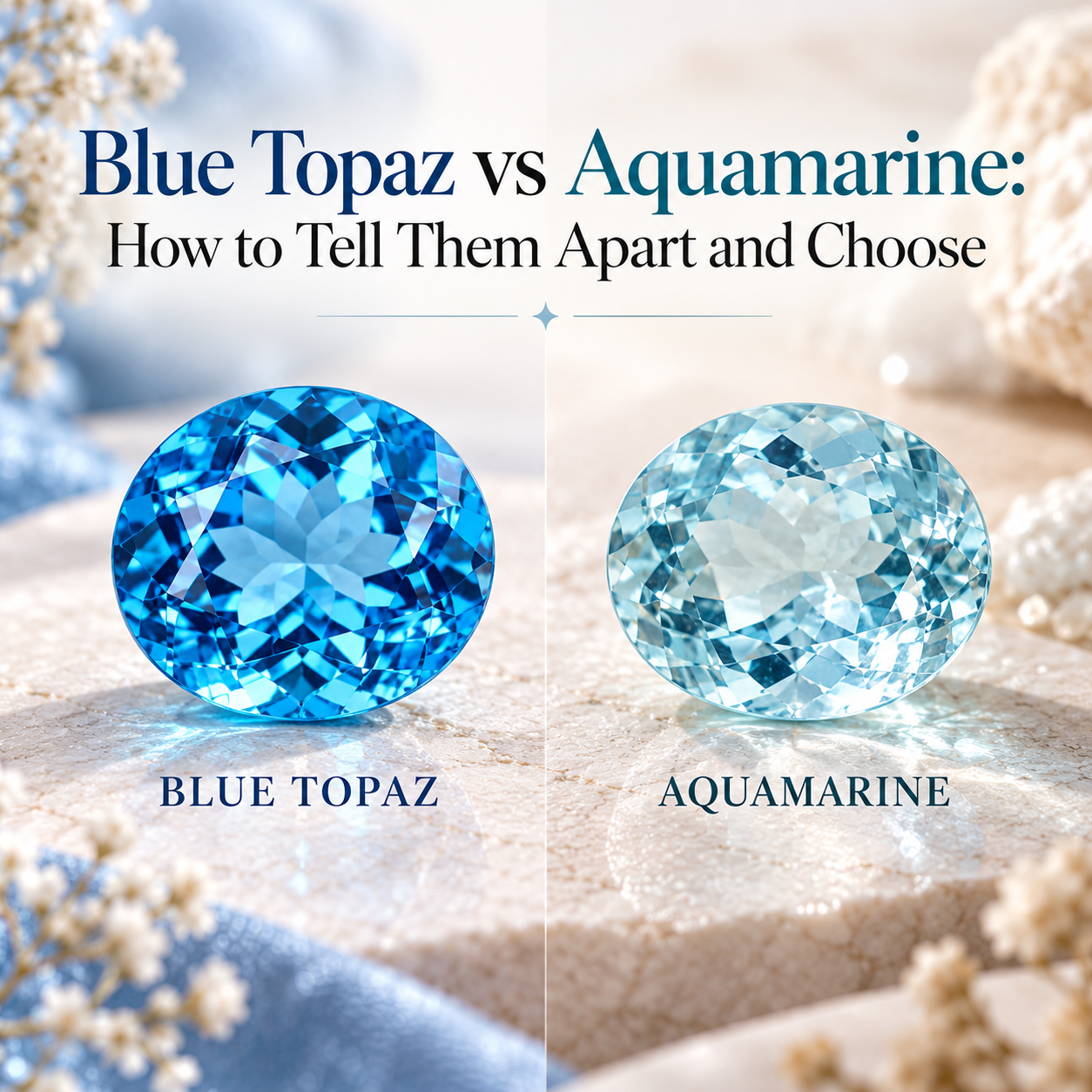
Put a blue topaz vs aquamarine side by side and plenty of shoppers can’t tell which is which. Both are clear, icy-blue stones and both look great in sterling silver. They’re also two very different gems, with different prices, durability, and birthstone months. If you’re shopping for a December birthday, a March birthday, or you just love a cool blue sparkle, this guide covers how they differ, how to spot each one, and which is the better fit for you.
The Quick Answer: What’s the Difference?
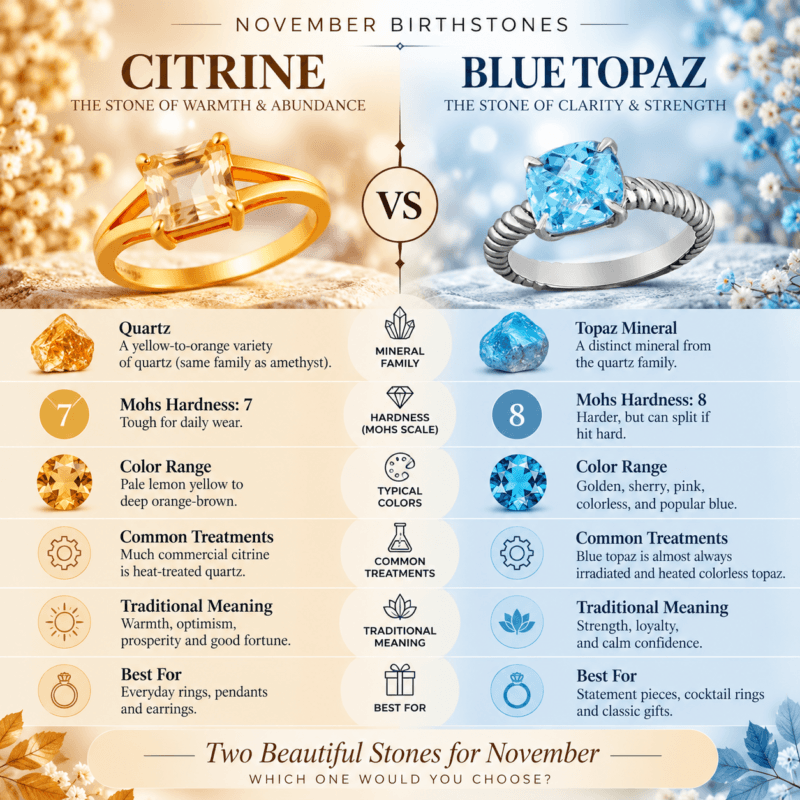
Blue topaz is a variety of the mineral topaz. Most blue topaz you’ll see in stores started out colorless or very pale and was treated (usually with irradiation followed by heating) to get its blue color. The result is a stable, permanent color that comes in several shades, from soft sky blue to deep, inky London blue. It’s also one of the traditional December birthstones, which makes our December topaz birthstone collection a natural place to start if you’re shopping for a winter birthday.
Aquamarine is a variety of beryl, the same mineral family as emerald. Its color comes from traces of iron, and it tends to be a softer, more watery blue, often with a slight green tint. Many aquamarines are gently heated to take out that green and leave a purer blue. Aquamarine is the March birthstone.
| Feature | Blue Topaz | Aquamarine |
|---|---|---|
| Mineral family | Topaz | Beryl (emerald’s cousin) |
| Typical color | Bright, saturated blue: Sky, Swiss, or London blue | Pale to medium blue, often slightly greenish |
| Hardness (Mohs) | 8 | 7.5 to 8 |
| Common treatment | Irradiation plus heat to create the blue | Heat to remove green tones |
| Birthstone month | December | March |
| Typical price | Usually affordable, even in larger sizes | Usually higher, especially in deeper blues |
| Weak spot | Can chip or split along a cleavage plane if hit hard | Can chip if knocked on a hard edge |
Color: The Easiest Way to Tell Them Apart
Color is the biggest giveaway, and it’s where your personal taste will probably decide things.
Blue topaz shades
- Sky blue: light, bright, and cheerful, like a clear afternoon sky.
- Swiss blue: a vivid, electric medium blue. This is the shade most people picture when they hear “blue topaz.”
- London blue: a deep, moody blue with a slightly gray-teal edge. It reads almost like a sapphire from across the room.
Aquamarine shades
Aquamarine is all about subtlety. Most stones are pale to medium blue, and some show a hint of sea-green. The most prized (and most expensive) aquamarines have a deeper, more saturated blue, but even those tend to look calmer and softer than Swiss blue topaz.
A good rule of thumb: if the stone looks bright, punchy, and evenly saturated, it’s probably blue topaz. If it looks soft and watery, like light through a swimming pool, it’s more likely aquamarine.
How to Tell Them Apart Beyond Color
Color gets you most of the way there, but it isn’t proof. A pale sky blue topaz can look a lot like a good aquamarine. A few other clues help:
- Check the listing or certificate. A reputable seller will name the stone and say whether it’s natural, treated, lab-created, or simulated. That’s the most reliable info you’ll get at home.
- Tilt the stone. Aquamarine often shows two slightly different tones (a bluer one and a paler, almost colorless one) as you turn it. Blue topaz usually looks about the same from every angle.
- Look at the sparkle. Blue topaz bends light a little more than aquamarine, so it can look slightly livelier and more brilliant when both are cut the same way.
- Consider the price. A large, deep blue stone at a very low price is far more likely to be blue topaz (or glass) than aquamarine.
For a definite answer, especially on an expensive or vintage piece, a gemologist can confirm it in minutes with a refractometer.
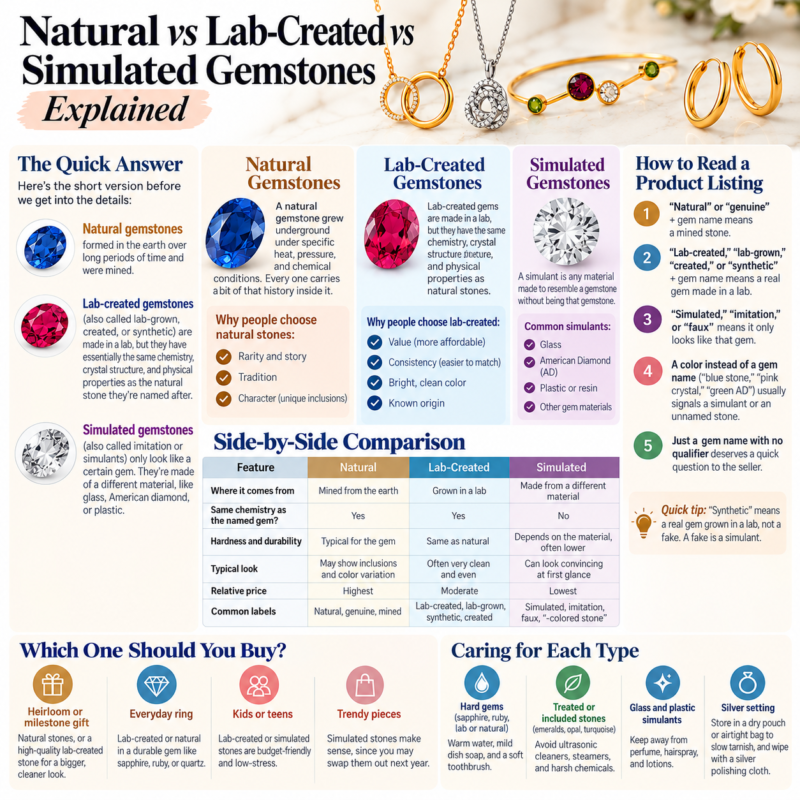
Natural, Treated, Lab-Created, or Simulated?
These words get mixed up a lot, so here’s what they mean for these two stones:
- Natural: the gem formed in the earth. Natural blue topaz is still natural topaz even after its color has been treated; the treatment just has to be disclosed.
- Treated: the natural stone’s color was improved. Nearly all blue topaz is treated, and many aquamarines are heat-treated. Both treatments are standard in the trade and stable with normal wear.
- Lab-created: grown in a lab with the same chemistry as the natural gem. Lab-created aquamarine and topaz exist but aren’t common in everyday jewelry.
- Simulated: something that just looks like the gem, such as blue glass, cubic zirconia, or synthetic spinel. “Aquamarine-colored” or “aqua crystal” often means a simulant.
If a description doesn’t say, it’s fair to ask the seller before you buy.
Meaning and Symbolism
Both stones carry a long history of lore. Treat it as tradition and storytelling, not a promise of any effect.
Aquamarine gets its name from the Latin for “seawater.” Sailors traditionally carried it as a charm for safe passage, and it has long been associated with calm, clarity, and courage. That ocean connection makes it a popular pick for beach lovers and March birthdays.
Blue topaz is traditionally associated with love, loyalty, and friendship. As a December birthstone, it’s a favorite holiday-season gift, and its cool blue fits right in with winter outfits.
Which One Should You Choose?
There’s no wrong answer, but these questions usually settle it:
- Whose birthday is it? December means blue topaz, March means aquamarine. Easy.
- What’s your budget? Blue topaz gives you more size and color for the money. If you want a bold cocktail ring or a big pendant without spending a lot, it’s the smart choice.
- Do you want bold or soft? Swiss and London blue topaz make a statement. Aquamarine is quieter and pairs easily with neutrals and pastels.
- How will it be worn? Both are hard enough for daily wear. For rings you’ll wear every day, look for protective settings like bezels or sturdy prongs, since both stones can chip if they hit a countertop or doorframe.
Both look beautiful in 925 sterling silver (92.5% silver blended with other metals, usually copper). Silver’s cool white tone makes the blue look crisp and bright, and a rhodium finish adds extra shine and helps slow tarnish.
How to Care for Blue Topaz and Aquamarine
Care is simple and mostly the same for both:
| Do | Don’t |
|---|---|
| Clean with warm water, a drop of mild dish soap, and a soft toothbrush | Use bleach, chlorine, or harsh household cleaners |
| Rinse well and pat dry with a lint-free cloth | Put blue topaz in an ultrasonic or steam cleaner |
| Take rings off for the gym, gardening, and heavy cleaning | Leave pieces in a hot car or near high heat for long periods |
| Store each piece in its own pouch or a lined jewelry box slot | Toss them loose in a drawer with harder stones like diamonds |
Topaz has a “cleavage plane,” a direction where a sharp knock can split the stone, so be extra careful with blue topaz rings. Aquamarine is a bit tougher in that respect, but a hard hit can still chip an edge. For the sterling silver setting, a quick wipe with a silver polishing cloth keeps it bright between deeper cleanings.
If you’re leaning toward blue topaz, our blue topaz sterling silver ring is a nice example of what this stone does best: a natural sky-blue topaz in a rhodium-finished 925 silver setting that’s easy to wear every day or give as a December birthday gift.
Frequently Asked Questions
Is blue topaz more expensive than aquamarine?
Usually not. Blue topaz is generally the more affordable stone, even in larger sizes and deeper colors. Aquamarine tends to cost more, and prices climb quickly for stones with a strong, saturated blue.
Can blue topaz be a substitute for aquamarine for a March birthday?
Some people do pick a pale sky blue topaz for the look and the lower price, and that’s a personal choice. Just know it isn’t the official March birthstone. If the birthstone tradition matters to the person you’re shopping for, go with aquamarine.
Does the color of blue topaz fade over time?
Treated blue topaz is considered color-stable with normal wear. Long exposure to strong heat is the main thing to avoid, so don’t leave it in a hot car or near a heat source for long periods. Everyday sunlight isn’t a concern.
Can I wear a blue topaz or aquamarine ring every day?
Yes, both are hard enough for daily wear. Take your ring off for workouts, gardening, and cleaning with chemicals, and choose a secure setting to protect the stone from knocks.
What are the other December birthstones besides blue topaz?
December has several birthstones on the modern US list: blue topaz, turquoise, tanzanite, and blue zircon. That gives December babies plenty of blue options in different shades and price ranges.