Blog
Rhodium Plating Explained: What It Means for Your Silver Jewelry


If you’ve ever looked at a product listing and seen “925 sterling silver, white rhodium plated,” you might have wondered what that second part actually means. Is it still real silver? Will it wear off? Does it change how you clean it? Here’s a plain-English guide to rhodium plating, so you know exactly what you’re buying and how to keep it looking bright.
What Is Rhodium Plating?
Rhodium is a rare, silvery-white metal in the platinum family. It’s very hard, very reflective, and it doesn’t tarnish the way silver does. Because it’s expensive and difficult to work with on its own, jewelers rarely make whole pieces from it. Instead, they apply a very thin layer of rhodium over another metal through electroplating.
On sterling silver, that thin coat does three jobs:
- Adds a brighter, cooler white shine than bare silver, which has a slightly warmer gray tone.
- Slows down tarnish, because the rhodium sits between the silver and the air.
- Adds a bit of scratch resistance to the surface while the plating is intact.
Underneath, the piece is still 925 sterling silver: 92.5% silver and 7.5% other metals, usually copper. The rhodium is a finish, not a replacement metal. If you like that crisp, mirror-like look, our white rhodium sterling silver pieces show the finish nicely.
White Rhodium vs. Black Rhodium
Rhodium plating comes in two main looks, and they behave a little differently.
| Finish | Look | Best for | Wear notes |
|---|---|---|---|
| White rhodium | Bright, icy white with a high shine | Everyday rings, earrings, pendants, pieces with clear or colorful stones | Wears gradually; bare silver underneath looks similar, so early wear is hard to spot |
| Black rhodium | Dark gunmetal to deep black | Edgy or vintage-inspired designs, men’s jewelry, contrast with white stones | Wear shows sooner because bright silver peeks through the dark layer |
| Bare sterling silver (no plating) | Soft, warm white-gray | Classic and oxidized designs, people who like a natural patina | Tarnishes over time but can be polished back with a silver cloth |
Is Rhodium-Plated Silver “Real” Silver?
Yes, as long as the base metal is genuine 925 sterling. The stamp tells you about the base, and the plating sits on top. What it isn’t is “solid rhodium” or “platinum,” and nobody should describe it that way.
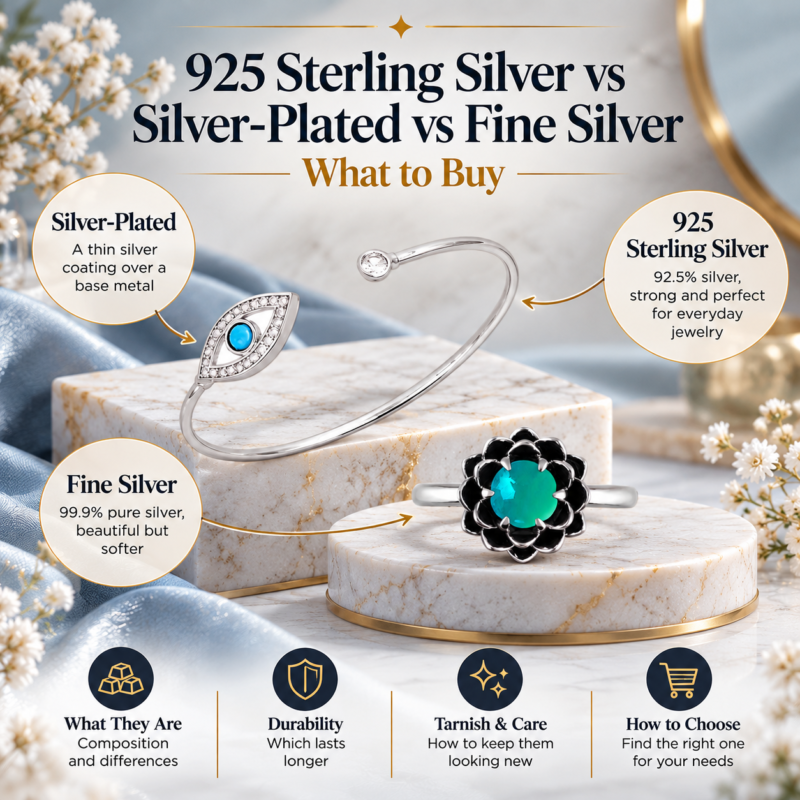
This is different from silver-plated jewelry, where a thin layer of silver covers a cheaper base like brass or copper. With rhodium-plated sterling, you’ve got real silver underneath and a protective finish on top. When the rhodium eventually wears, you’re left with sterling silver, not a base metal.
How Long Does Rhodium Plating Last?
There’s no single answer, because it depends on how thick the layer is and how much friction the piece gets. As a general rule of thumb:
- Rings and bracelets wear fastest, since they rub against desks, steering wheels, and other jewelry. You may notice changes within months to a couple of years of daily wear.
- Earrings and pendants get far less contact and can keep their finish for years.
- Black rhodium tends to show wear sooner than white because of the color contrast.
Signs your plating is thinning: a slightly warmer or grayer tone on high points, light tarnish spots where there used to be none, or (on black rhodium) silver showing through on edges.
Does Rhodium Plating Help With Sensitive Skin?
For some people, it can. While the plating is intact, your skin touches rhodium rather than the silver alloy, and many people who react to certain metals find rhodium comfortable. That said, plating isn’t a guarantee. Once it wears thin, your skin is back in contact with the sterling alloy underneath.
If you know you’re sensitive, check the full metal description on a product, wear a new piece for short stretches at first, and talk to a dermatologist if you have a known metal allergy.
How to Clean Rhodium-Plated Jewelry
This is where rhodium differs most from bare silver. The goal is to clean the surface without scrubbing away the plating.
- Fill a small bowl with lukewarm water and a drop of mild, fragrance-free dish soap.
- Soak the piece for a few minutes.
- Gently wipe with a soft, lint-free cloth or a very soft baby toothbrush around stone settings.
- Rinse in clean water and pat completely dry with a microfiber cloth.
| Do | Don’t |
|---|---|
| Use mild soap and lukewarm water | Use silver dip, tarnish-remover liquids, or toothpaste |
| Dry with a soft microfiber cloth | Rub hard with a polish-treated silver cloth (it can wear the plating faster) |
| Put jewelry on after lotion, perfume, and hairspray | Wear it in chlorinated pools or hot tubs |
| Store pieces separately in soft pouches | Toss rings and bracelets together in one dish |
If a piece has soft or porous stones like opal, turquoise, or pearl, skip the soak and just wipe it with a damp cloth.
Can Rhodium Plating Be Redone?
Yes. Many local jewelers offer replating. They’ll clean and polish the piece, then dip it back into a rhodium bath so it looks close to new. Prices vary by jeweler and by how detailed the piece is, so it’s worth calling around.
A couple of things to ask first:
- Will the stones be safe? Some gems, glued settings, and treated stones don’t handle the plating process well. A good jeweler will tell you if a piece needs special care or isn’t a good candidate.
- White or black? If you’re replating black rhodium, confirm the jeweler offers it, since not every shop does.
Is Rhodium Plating Worth It?
It comes down to how you like your jewelry to look and how much maintenance you want.
- Choose rhodium-plated sterling if you love a bright, cool white shine, want less frequent polishing, or are pairing silver with sparkling clear stones.
- Choose bare sterling if you like a softer tone, enjoy a little patina, or want to polish pieces yourself whenever you like.
- Choose black rhodium if you want a dramatic, moody finish that makes white stones and fine details stand out.
Plenty of people own all three and mix them depending on the outfit. If the darker finish has caught your eye, take a look at our black rhodium silver pieces whenever you’re ready to try something a little bolder.
Frequently Asked Questions
Does rhodium-plated sterling silver tarnish?
Rhodium itself doesn’t tarnish, so a freshly plated piece stays bright for a long time. As the plating wears thin, the sterling silver underneath can start to tarnish in those spots. Gentle cleaning and dry storage help the finish last longer.
Can I shower with rhodium-plated jewelry?
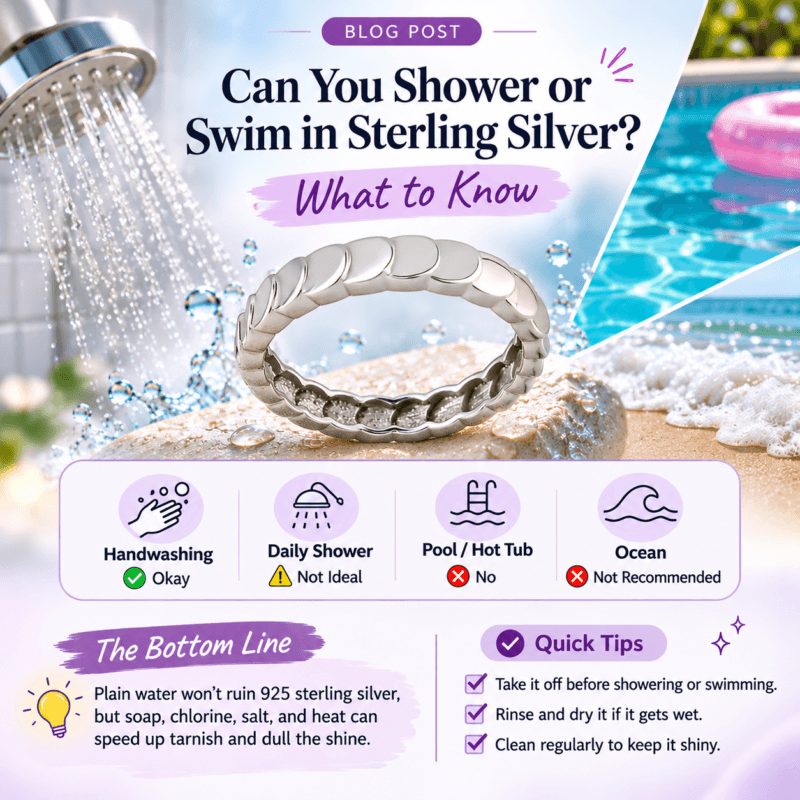
An occasional splash of water won’t ruin it, but daily showers expose it to soap, shampoo, and hard-water minerals that dull the surface over time. It’s best to take it off before showering, swimming, or using a hot tub.
How can I tell if my silver jewelry is rhodium plated?
Rhodium-plated pieces usually look whiter and more mirror-like than bare sterling, which has a slightly warmer gray tone. The easiest way to know for sure is to check the original product description or ask the seller. A jeweler can also confirm it for you.
Is rhodium plating the same as white gold?
No. White gold is a gold alloy, and it’s often rhodium plated to make it look whiter. Rhodium-plated sterling silver has a silver base instead of gold, so the two can look similar on the surface but are different metals underneath.