Blog
How to Stack Rings: A Simple Ring Stacking Guide

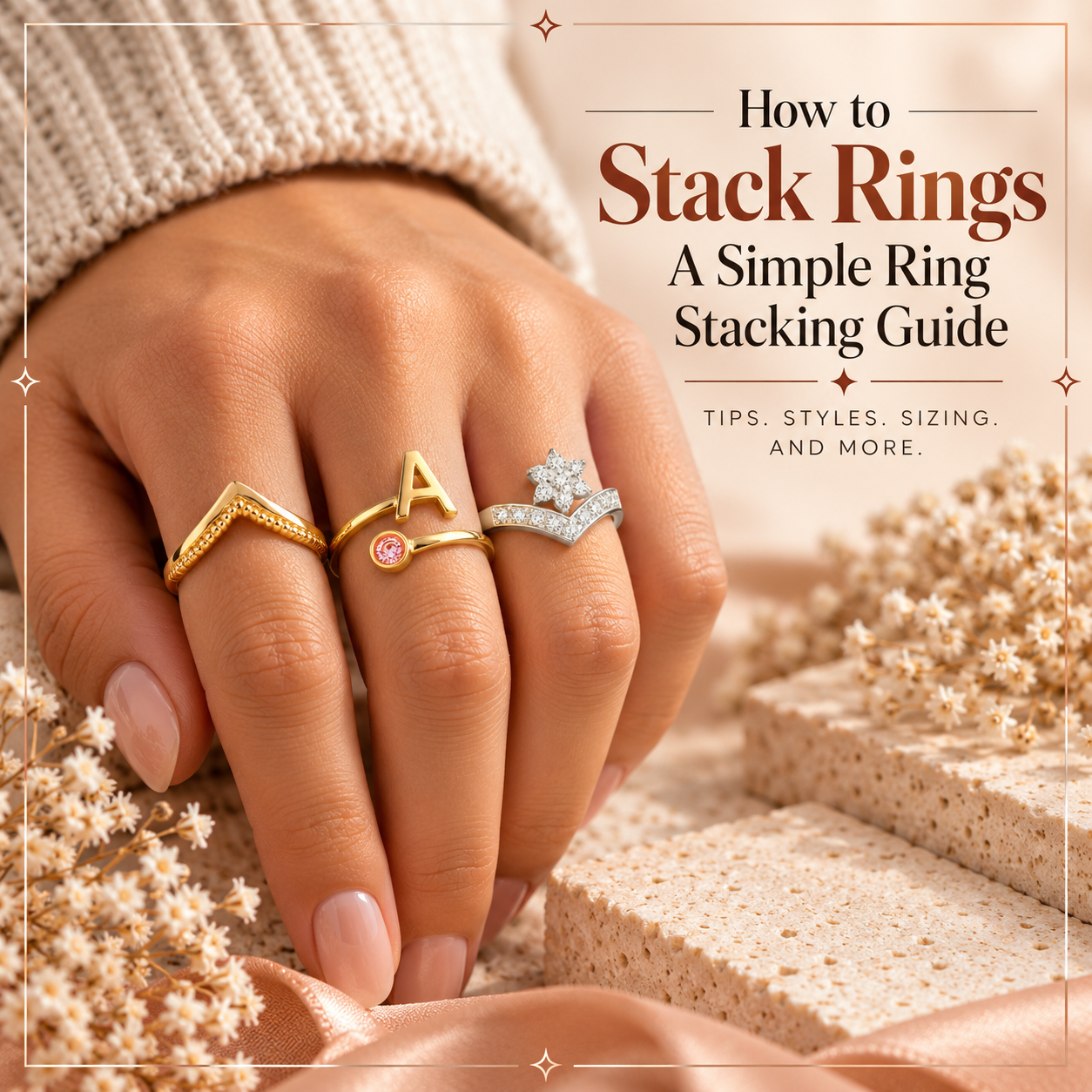
Ring stacking look effortless on other people’s hands, but the first time you try one, it’s easy to end up with something that feels clunky, spins all day, or pinches when you make a fist. The good news is that a great stack follows a few simple rules. Once you know them, you can build a look that’s yours, wear it every day, and swap pieces in and out as your mood (or outfit) changes.
Start With an Anchor Ring
Every good stack has one piece that the rest of the rings support. Think of it as the main character. It might be a gemstone solitaire, a wider band with texture, or a sentimental ring you never take off.
Pick your anchor first, then build around it. If you’re starting from scratch, a simple band in sterling silver rings for women is the easiest base to work with, because silver pairs with almost every stone color and won’t fight with the rest of your jewelry.
- Bold anchor: a cocktail ring or larger stone. Keep the rings around it thin.
- Quiet anchor: a plain band. You can add more detail and sparkle around it.
- Sentimental anchor: a wedding band or family ring. Build a stack that protects it and lets it stay the focus.
The Three Rules of a Balanced Stack
1. Mix widths
Three rings of the exact same width tend to look like one thick band. Instead, pair one wider band (around 3–5 mm) with one or two skinny ones (1–2 mm). The contrast is what makes a stack look deliberate.
2. Mix textures
Try combining a high-polish band with something hammered, twisted, beaded, or set with small stones. Texture adds interest even when everything is the same metal.
3. Leave some breathing room
You don’t need rings on every finger. A stack of two or three on one finger, plus a single ring on another hand, often looks more polished than covering both hands. Negative space matters.
Which Fingers to Stack (and How Many Rings)
There’s no single correct way, but some fingers handle stacks better than others. Here’s a quick cheat sheet:
| Finger | Best for | Suggested number of rings | Good to know |
|---|---|---|---|
| Index | A single statement ring or two slim bands | 1–2 | You use this finger constantly, so keep it low-profile. |
| Middle | Bold rings and wide bands | 1–3 | Your longest finger can carry the most visual weight. |
| Ring finger | Wedding sets, solitaires, delicate stacks | 2–4 | Classic spot for a full stack built around an anchor. |
| Pinky | Signet styles, thin bands, a single gemstone | 1–2 | A small ring here balances a busy hand. |
| Thumb | One simple band | 1 | Comfortable and modern, but skip anything with prongs. |
Midi rings (worn above the knuckle) can add a fun detail, but they slip easily. Save them for days when you’re not typing, lifting, or washing your hands every hour.
Sizing Rings for a Stack
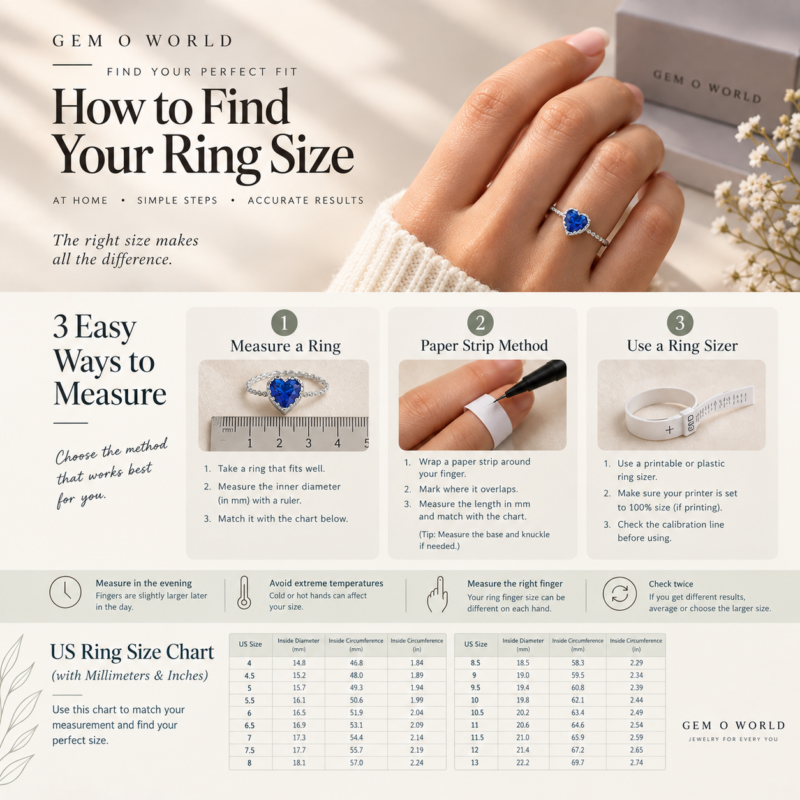
This is the part most people skip, and it’s why stacks feel uncomfortable. Several rings on one finger take up more space than one ring does, so your usual size may feel tight once you add a third band.
- Two thin bands (under 2 mm each): your normal size usually works.
- Three or more rings, or a total stack wider than about 6 mm: consider going up a quarter or half size, especially for the middle rings.
- Wide bands: these fit snugger than thin ones in the same size, so many people size up a half for anything 5 mm or wider.
For reference, a US size 6 ring has an inner diameter of roughly 16.5 mm (about 51.9 mm circumference), and a US size 7 is roughly 17.3 mm (about 54.4 mm circumference). Each half size changes the diameter by about 0.4 mm, which is why a quarter size can make a real difference in a stack.
Fingers also swell in heat and shrink in the cold. If you’re sizing in October and plan to wear the stack all summer, leave a little room.
Mixing Metals and Gemstones
Gone are the days when everything had to match. Mixed-metal stacks are popular, and they’re a smart way to wear silver and gold-tone pieces you already own.
- Repeat each metal at least twice. One gold ring in a silver stack can look accidental. Two looks planned.
- Use a two-tone ring as a bridge. A band with both silver and gold tones connects the two metals naturally.
- Know what you’re wearing. 925 sterling silver is 92.5% silver and 7.5% other metals, usually copper. Gold-plated, rose gold-plated, and gold-filled pieces have a gold layer over a base metal, so they’re not solid gold, and they’ll wear differently over time.
For gemstones, choose one color story and stick with it. A few ideas:
- Tonal: different shades of one color, like amethyst with pale lavender stones.
- Birthstone stack: one stone for each family member, separated by plain bands.
- Clear and white: cubic zirconia, moonstone, or pearl for a soft, bridal feel.
Keep in mind that many affordable “sparkle” stones are lab-created or simulated rather than natural. That’s not a bad thing, and they can look beautiful, but it’s worth checking the product description so you know exactly what you’re buying.
Stacking Styles to Try
The everyday minimalist
Two or three thin, polished silver bands on one finger, plus a tiny stone ring on the opposite hand. It’s quiet enough for the office and holds up to daily wear.
The weekend statement
A cocktail ring on your middle finger, flanked by a slim band on each side. Keep the other hand mostly bare so the statement piece stands out.
The wedding set upgrade
Add a thin band above and below your engagement ring. Many people call these “guard” rings, since they help keep a solitaire from spinning and shield it from bumps.
The textured silver stack
One twisted band, one hammered band, and one beaded band, all in sterling silver. No stones needed. The texture does the work.
Common Ring Stacking Mistakes
- Stacking prongs against prongs. Raised settings rub against each other, which can scratch metal and loosen stones over time. Put a smooth band between them.
- Ignoring comfort. If you can’t close your hand or your finger looks pinched, the stack is too tight. Size up the middle rings or remove one.
- Too many focal points. Two big stones on the same finger compete. Let one ring lead.
- Forgetting the rest of your jewelry. A heavy ring stack plus chunky bracelets on the same wrist can feel crowded. Balance a busy hand with a lighter wrist.
Caring for Stacked Rings
Rings that sit side by side rub against each other all day, so they need a bit more attention than a single ring.
- Take stacks off for workouts, cleaning, swimming, and applying lotion or hand sanitizer.
- Wipe sterling silver with a soft polishing cloth to keep tarnish under control.
- Store rings separately or in a lined box with dividers so stones don’t scratch metal.
- Check prongs and settings every few months, especially on rings that sit next to others.
Building a stack is a slow, fun process. Start with one or two rings you love and add a new piece when something catches your eye. If you’d like a little color in the mix, our gemstone rings for women are an easy way to add a pop of personality next to your silver bands.
Frequently Asked Questions
How many rings should you wear at once?
Most people feel comfortable with three to six rings total across both hands. On a single finger, two to four thin rings is usually the sweet spot. Start small and add pieces until it feels balanced, not crowded.
Should stackable rings be a size bigger?
Not always. Two thin bands usually fit in your normal size. If you’re wearing three or more rings on one finger, or the stack is wider than about 6 mm, a quarter or half size up often feels more comfortable.
Can I stack sterling silver rings with gold rings?
Yes, mixed-metal stacks are very popular right now. Try to repeat each metal at least twice so the look feels intentional. Softer metals and plated layers can rub against each other, so check plated pieces now and then for wear.
Which hand should I wear a ring stack on?
In the US, engagement and wedding rings are traditionally worn on the left ring finger, but fashion stacks can go anywhere. Many people put their main stack on their non-dominant hand, since it gets fewer knocks during the day.